KENNESAW, Ga. | Apr 29, 2026
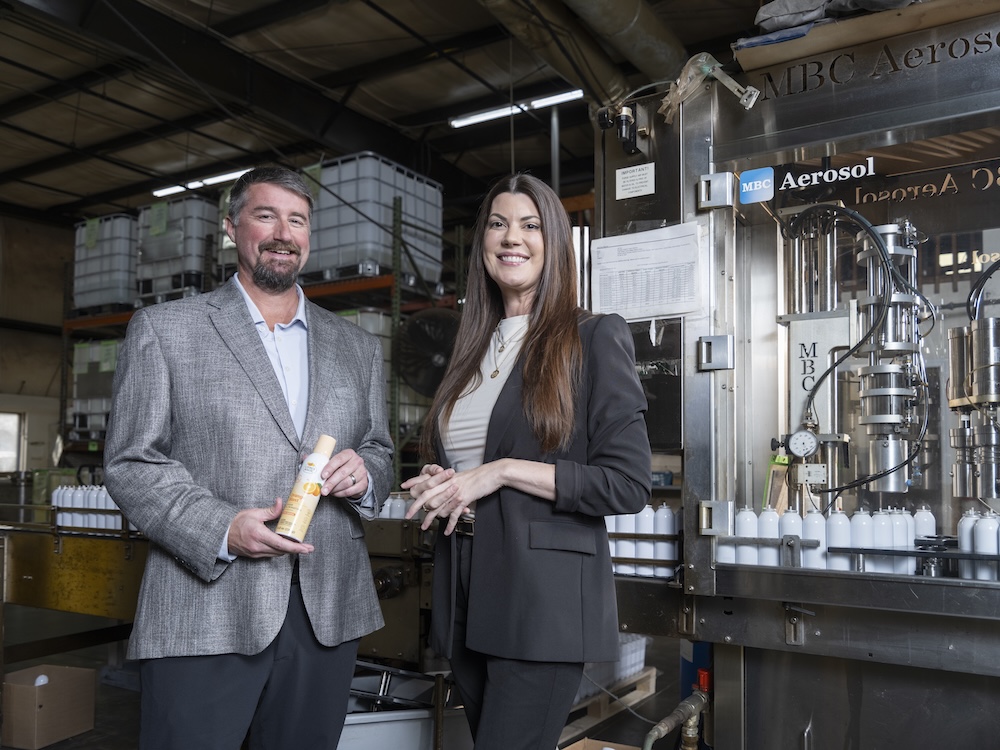
Two years in, he was ready to start a business of his own. One day, while browsing a hardware store aisle, a can of air freshener caught his attention. Reading the label, he noticed it was made in Peachtree City, Georgia. Curious, he called the phone number on the back and asked the owners if they would consider selling the company.
The answer was “Yes.”
That phone call marked the beginning of what would become Beaumont Products, a Kennesaw-based manufacturing and distribution company supplying air fresheners, cleaning products, laundry detergents, and specialty items to major retailers nationwide, including Publix, Kroger, Walmart, and Target.
Decades later, as Beaumont Products grew and Picken neared retirement, he faced a challenge familiar to many family-owned businesses: handing the reins to the next generation.
“It’s a lot like handing your child over to someone else to raise,” said Jeff Picken, who succeeded his father as Beaumont’s CEO. “At the same time, the second generation is trying to step into leadership while still being seen as the child.”
To help navigate that transition, the Pickens turned to Kennesaw State University’s Family Enterprise Center, an institution that provides specialized support to family businesses in Georgia and beyond.
Founded in 1987 by Craig Aronoff, then a professor of management and chair of private enterprise in the Michael J. Coles College of Business, the center began as a small peer group where family business owners could learn from one another.
That initiative evolved into the Family Business Forum.
At a time when Kennesaw State had just about 5,000 students enrolled and was little-known, the Family Business Forum quietly began attracting attention.
The team at the Family Business Review journal, then based at Yale University, learned about the innovative program and traveled to Georgia to interview Aronoff.
“They asked, ‘How did you do this? Why did you do this? How did you make it work?’” he recalled.
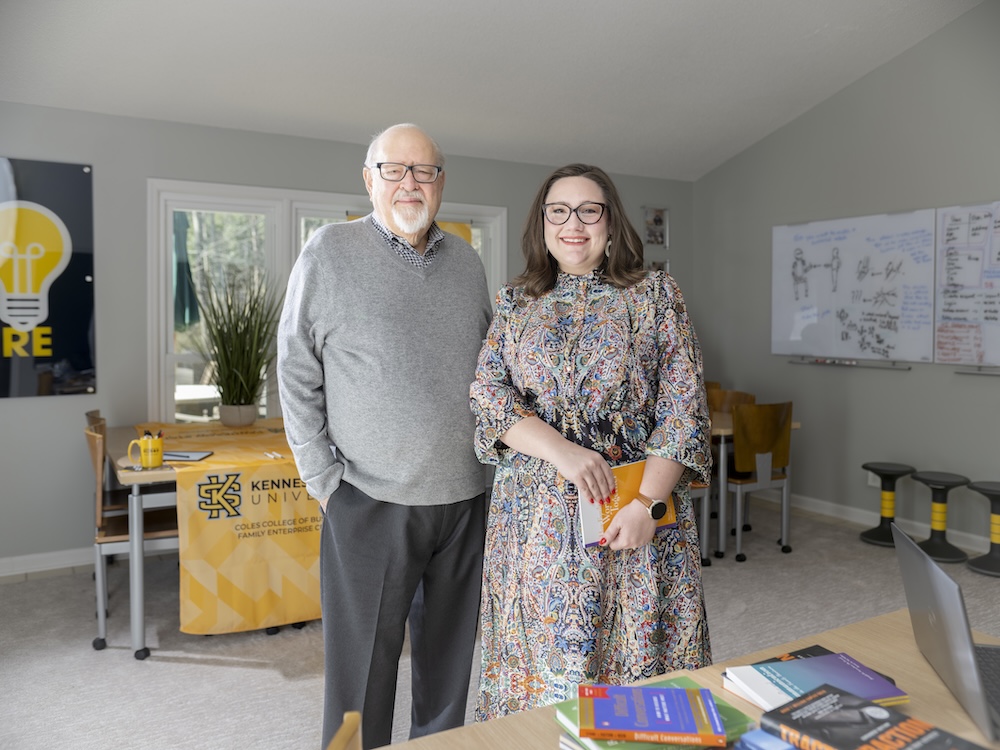
“Somewhere between 100 and 150 colleges and universities adopted the framework, which became known as the ‘K Model,’ the K of course was for Kennesaw,” Aronoff said. “We became the model for how to do family business education for the country and to some extent for the world.”
The momentum grew further when The Wall Street Journal published a story highlighting business schools that were paying closer attention to family enterprises and named the top places to study the field as “Harvard, Wharton and Kennesaw State.” For a once little-known college, being mentioned alongside elite institutions was validation.
Over time, the Family Business Forum grew into the Family Enterprise Center, one of the world’s leading institutions dedicated to family enterprises. Its mission is to provide tailored support that addresses the unique challenges family businesses face, particularly those tied to navigating family dynamics alongside business demands.
One of the most common challenges is succession planning. An estimated 85% of U.S. businesses are family-owned, yet only about 30–40% survive into the second generation, with an even smaller percentage making it to the third.
For the Picken family, the center’s guidance helped reframe difficult conversations.
“They helped us understand that what we were experiencing wasn’t personal failure,” Jeff Picken said. “It was a very typical first-to-second generation transition. Once you realize there’s a science behind it, you can take the emotion out of the conversation.”
The center is also preparing Picken’s niece Brittany Jolle, the current vice president of sales, who is in line to become the third-generation leader at Beaumont.
“The biggest thing the Center has taught us, is keeping things separate,” Jolle said. “Family time is family time, and work time is work time. We try to silo the two. It’s not always perfect, but we make a conscious effort not to let work spill over into our personal lives. If we’re not getting along at work, that doesn’t need to affect Christmas dinner.”
Since its inception, the Family Enterprise Center has spent nearly four decades shaping how family-owned businesses not only grow, but also last.
“Family businesses are not simply businesses owned by families,” said Aronoff. “They are systems where family, ownership, and management overlap. If you don’t understand those dynamics, you don’t understand the business.”
Today, under the leadership of Director Sara Davis, the center blends research with practical application, offering programs that support both established and next-generation leaders while remaining deeply connected to the local business community.
“Everything we do is grounded in education, connection, and support,” Davis said. “That includes peer groups, panel discussions, monthly meetings, and hands-on workshops designed to help family businesses grow intentionally while preserving their legacy and navigating complex family dynamics. That balance is critical.”
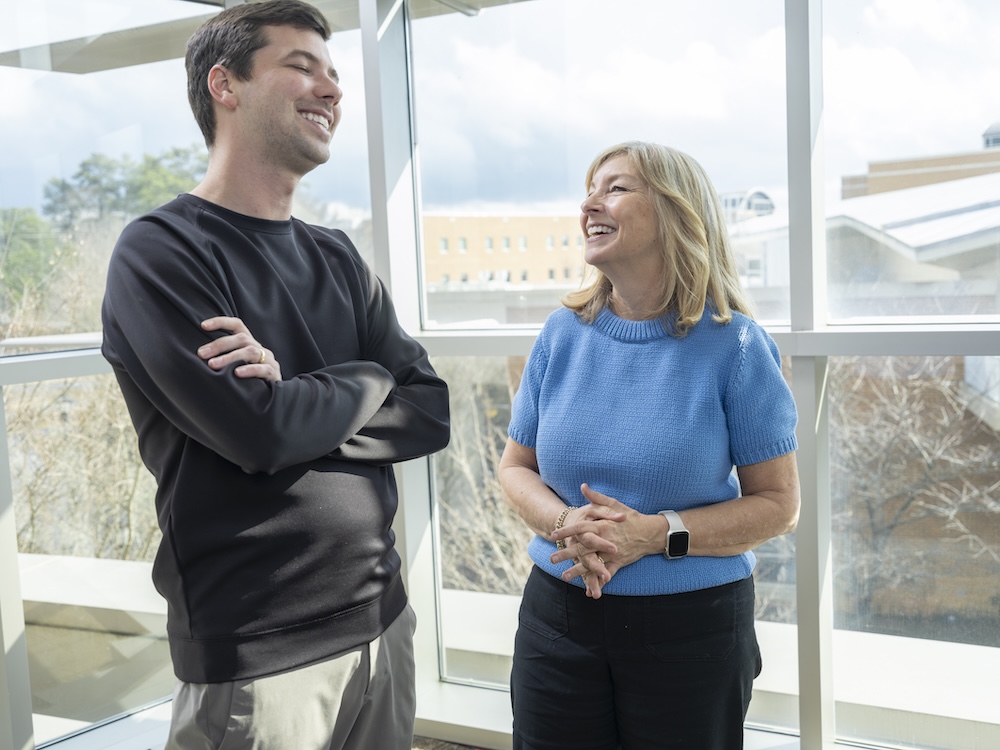
“We saw family business as something that was mostly dysfunctional,” Cindi said. “I had been running the company for almost two decades on my own, and I didn’t want to risk our family dynamic.”
Around that time, Cindi was introduced to Gaia Marchisio, then executive director of the Family Enterprise Center, and turned to her for guidance. Marchisio encouraged Cindi and Matt to meet with the rest of the family, including Cindi’s husband and daughter, to openly discuss concerns. From that conversation came one clear rule: no work-related discussions during family vacations or gatherings.
“Matt brought so much to the company, knowledge and skills I didn’t even know we needed,” Cindi said. “Since he joined eight years ago, our gross profit has grown by more than 200 percent. We’re incredibly grateful to the center for helping us navigate that transition.”
For Matt, one of the most impactful experiences was the Family Enterprise Center’s Mini MBA for Family Enterprise Next-Gen Leaders. The nine-month program brought together business owners and next-generation leaders from various industries for full-day monthly sessions that combine expert instruction, peer learning, and real-world problem-solving.
“I was one of the youngest participants, surrounded by leaders with decades of experience,” Matt said. “The relationships I built have lasted well beyond the program. Years later, I’m still learning from people I met in that room.”
His advice to others considering the center is simple: don’t wait until something goes wrong.
“If you’re thinking about succession, leadership transition, or even improving communication, this is the place to start,” he said. “They’ll connect you with the right resources and people who truly understand your challenges.”
The Family Enterprise Center has done more than offer guidance. It has helped ensure that the enterprises shaping local economies and communities can continue for generations.
“Family businesses carry the values, history, and identity of the people who built them,” Aronoff said. “When you help a family business succeed, you’re not just helping a company. You’re preserving a legacy.”
This article also appears in the current issue of Summit Magazine.
– Story by Christin Senior
Photos by Darnell Wilburn
A leader in innovative teaching and learning, Kennesaw State University offers undergraduate, graduate, and doctoral degrees to its more than 51,000 students. Kennesaw State is a member of the University System of Georgia with 11 academic colleges. The university's vibrant campus culture, diverse population, strong global ties, and entrepreneurial spirit draw students from throughout the country and the world. Kennesaw State is a Carnegie-designated doctoral research institution (R2), placing it among an elite group of only 8 percent of U.S. colleges and universities with an R1 or R2 status. For more information, visit kennesaw.edu.