KENNESAW, Ga. | Jul 28, 2026
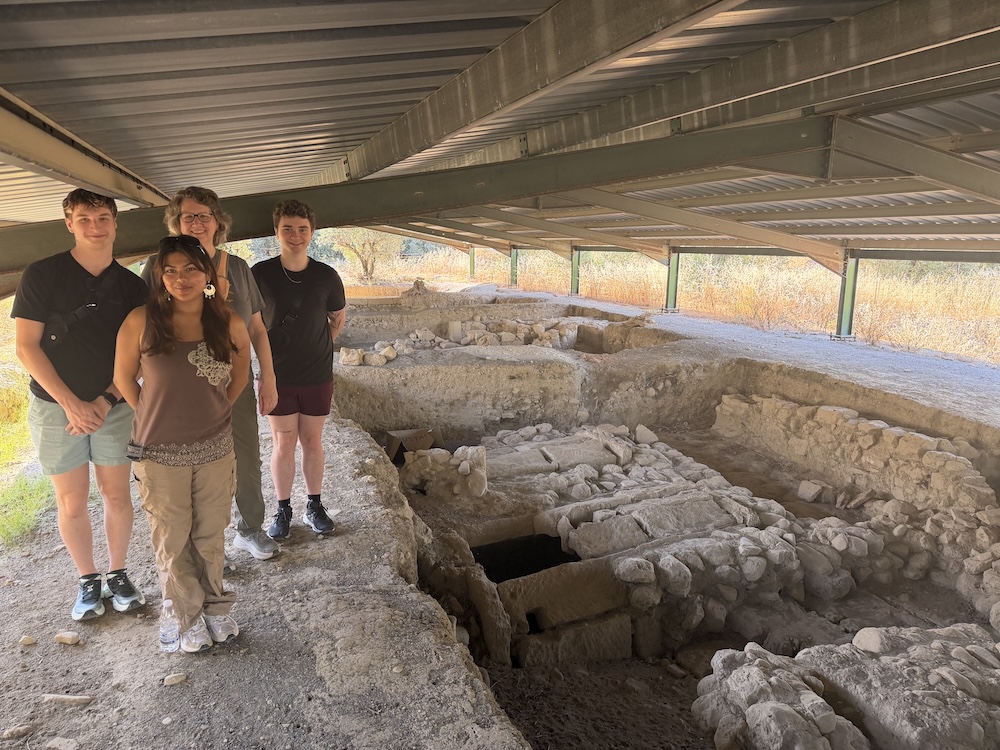
Drilling is one of four Kennesaw State University students who spent part of their summer at an archaeological research center, studying human skeletal remains dating from the fifth to seventh centuries to uncover clues about how people lived, what they ate, and the injuries and illnesses they experienced.
Led by Susan Kirkpatrick Smith, an associate professor of anthropology in KSU’s Norman J. Radow College of Humanities and Social Sciences, the students traveled to Greece for a hands-on study-abroad experience.
Since 2007, Smith, a biological anthropologist and bioarchaeologist, has been bringing small groups of KSU students to the Institute for Aegean Prehistory Study Center for East Crete, a research facility dedicated to archaeology and archaeological science. There, they work alongside professional archaeologists, learning how to clean, reconstruct and analyze human skeletal remains excavated from sites across the island.
This year, the students focused on remains from two adjoining graves — one containing 14 individuals, the other 20 — with almost no other archaeological context to explain who these people were or why they were buried there.
“This is really all we know about the people," said Smith, a faculty fellow in the Keeping Sights Upward Journey Honors College. “We're trying to figure out if they all died at the same time, why they were all buried together, if they had any diseases and what life was like for them. So the students are really helping to contribute to telling the story of people in the past.”
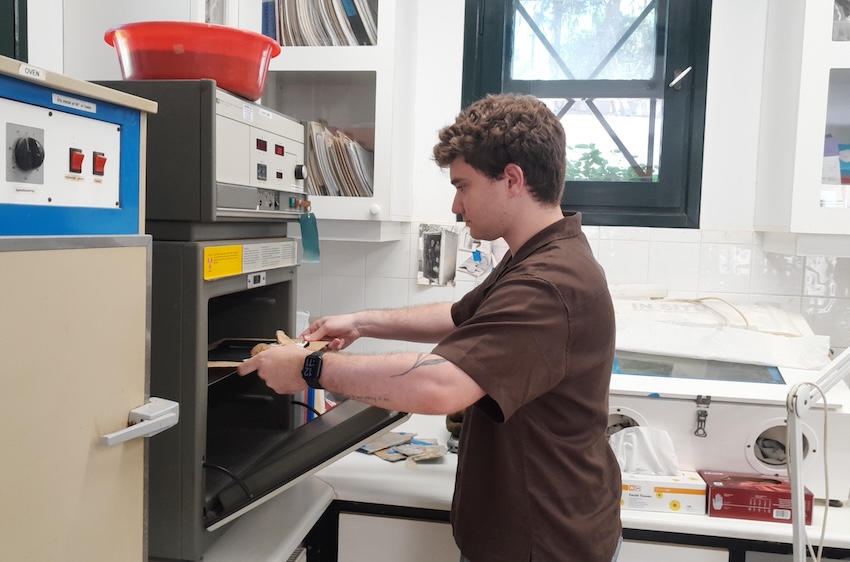
“They see how things go from, ‘Here’s the site,’ to studying it in the laboratory, to sharing that information with the community and the world,” Smith said.
Drilling said the expereince built on their classroom learning and introduced them to areas of archaeology and anthropology they had never encountered.
“I was exposed to so many niche subcategories of archaeology and anthropology, and it was very interesting to learn about each and every one of them,” Drilling said. “This experience taught me how to collaborate with people from other areas of archaeology to contribute to an overall goal.”
Beyond analyzing bones, the students had the opportunity to meet with archaeologists who specialize in pottery, visited conservation laboratories where broken objects are reconstructed, and toured archaeological sites with the researchers who study them. Later, they saw pottery, tools, and jewelry from those sites displayed in a nearby museum.
“Having the opportunity to travel to Crete with Dr. Smith and get hands-on experience, while also applying the methodologies I have spent the past few years studying, was the most rewarding and fulfilling experience of my academic career thus far,” said Morgan Fowler, a senior anthropology major.
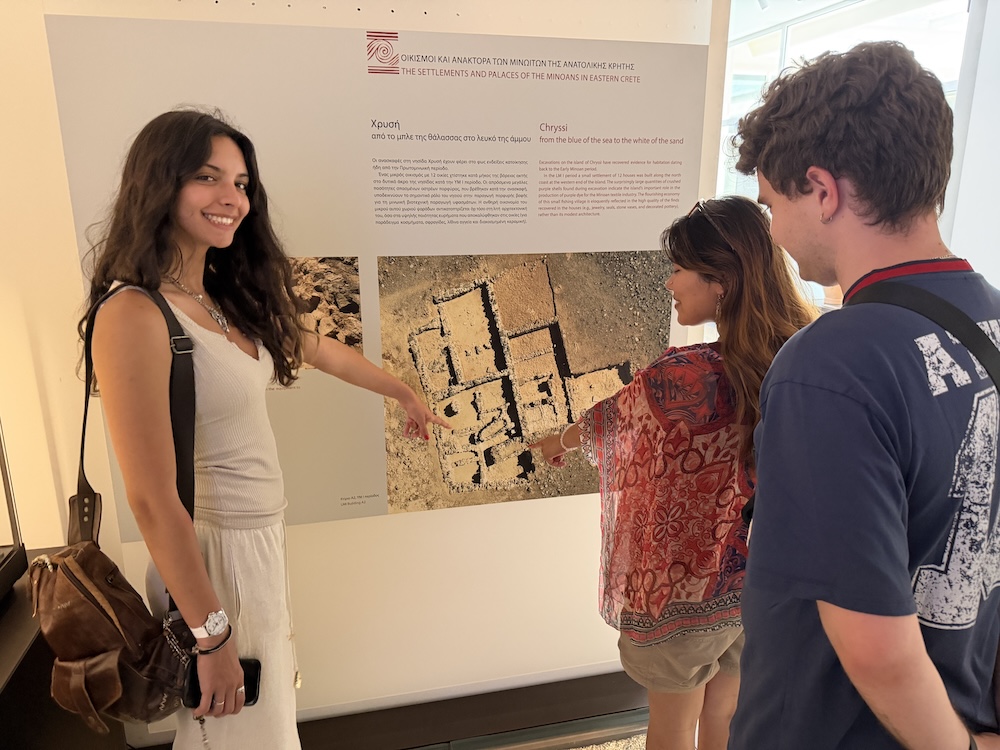
“We can honor the lives and stories of those whom we are studying and recognize that they were real people and more than the bones in front of us,” said Fowler, who is also president of the Student Anthropology Club at KSU. “Our work is meaningful because humans are meaningful.”
Smith noted that students have limited opportunities to study human remains in the U.S. because of the country’s complex history surrounding the excavation of Native American and enslaved African American burial sites.
She also noted that Greece has more excavated human remains than trained bioarchaeologists available to study them. Many remains are therefore protected and stored in museum warehouses until researchers can analyze them.
“Greece is a really great place to do this research,” Smith said. “The students get both the research and the study abroad experience while helping the people of Greece uncover their history.”
Smith said the findings from the study are being compiled for future publication.
– Story by Christin Senior
Photos provided
A leader in innovative teaching and learning, Kennesaw State University offers undergraduate, graduate, and doctoral degrees to its more than 51,000 students. Kennesaw State is a member of the University System of Georgia with 11 academic colleges. The university's vibrant campus culture, diverse population, strong global ties, and entrepreneurial spirit draw students from throughout the country and the world. Kennesaw State is a Carnegie-designated doctoral research institution (R2), placing it among an elite group of only 8 percent of U.S. colleges and universities with an R1 or R2 status. For more information, visit kennesaw.edu.