KENNESAW, Ga. | Jul 29, 2026

Through a National Science Foundation-funded project, they are using interactive visualizations to make one of electrical engineering's most challenging subjects easier for students to understand.
Three faculty members are leading the University's role in the collaborative effort. Southern Polytechnic College of Engineering and Engineering Technology Professor Sandip Das, Principal Lecturer Sheila Hill and Assistant Professor Beibei Jiang are introducing interactive visualizations into electrical engineering classrooms that help students see the invisible sub-atomic phenomena that are key to understanding the behavior of semiconductors. The goal is to improve student comprehension, alleviating misconceptions and prepare more competent graduates for careers in one of the nation's fastest-growing industries.
The project centers on KSU's required semiconductor devices course for electrical engineering students. Researchers are studying whether interactive computer visualizations can improve students' understanding of complex semiconductor concepts. Many of these processes occur at the subatomic level and cannot be seen with the naked eye.
During the study, students complete activities before using the visualizations. They then explore interactive animations that simulate how electrons and other subatomic particles behave inside semiconductor materials before completing follow-up assessments.

"Students often develop misconceptions because we are teaching concepts they cannot physically see," Das said. "We are talking about electrons, photons, and other quantum particles. Students can read about them in textbooks, but these interactive visualizations help bridge the gap between reading about a concept and truly understanding it."
The interactive modules were developed by researchers at the Georgia Institute of Technology and are being implemented at five universities, including Kennesaw State. Each animation allows students to manipulate variables and immediately observe how changes affect microscopic processes inside semiconductor devices, helping them connect abstract theory with real-world behavior. While KSU faculty lead the classroom implementation, Purdue University researchers oversee the project's educational assessment.
Faculty members incorporate the visualizations into classroom lessons and assignments, allowing students to adjust variables within the simulations and instantly observe how those changes affect the movement of charge carriers inside semiconductor devices. Researchers then compare students' understanding before and after using the modules to measure how effectively the visualizations improve conceptual learning.
The research comes at a time when the United States is investing heavily in expanding domestic semiconductor manufacturing and developing a larger workforce to support the industry. Semiconductors are essential to nearly every modern technology, including smartphones, computers, electric vehicles, medical devices and artificial intelligence systems.
"From the moment you wake up until you go to bed, almost everything you do involve semiconductor devices," Das said. "Whoever has the best semiconductor technology has an advantage across medical, defense, manufacturing and countless other industries. That is why developing a skilled workforce in this area has become a national priority."
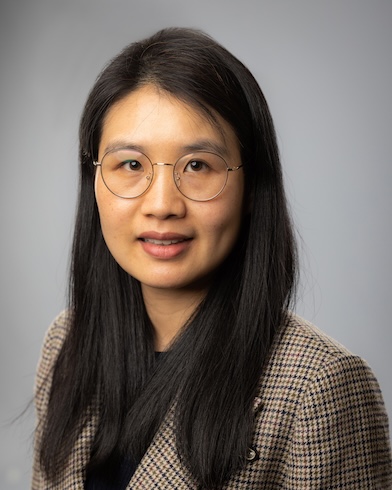
"One of the biggest problems we see is that students get into semiconductors, struggle with the concepts and decide not to pursue the field," Hill said. "If we can help them understand the material and get excited about it, they can make course choices that prepare them for careers in semiconductor manufacturing, solar power and many other important industries.”
For Kennesaw State students, the success of the project could mean not only a better understanding of semiconductor devices, but also greater confidence in pursuing careers that will shape the future of technology.
"I have seen more students showing interest in further education in semiconductors," Jiang said. "Students are reaching out to ask about careers, additional courses they should take and opportunities to participate in workshops. It all starts with this course because it helps build their interest and confidence."
This work is supported by the National Science Foundation’s Division of Undergraduate Education under Award No. 2337145.
– Story by Raynard Churchwell
Photos provided
A leader in innovative teaching and learning, Kennesaw State University offers undergraduate, graduate, and doctoral degrees to its more than 51,000 students. Kennesaw State is a member of the University System of Georgia with 11 academic colleges. The university's vibrant campus culture, diverse population, strong global ties, and entrepreneurial spirit draw students from throughout the country and the world. Kennesaw State is a Carnegie-designated doctoral research institution (R2), placing it among an elite group of only 8 percent of U.S. colleges and universities with an R1 or R2 status. For more information, visit kennesaw.edu.