Kennesaw State researchers examine Atlanta’s World Cup moment

KENNESAW, Ga. | Jun 11, 2026

Situated in the Atlanta metropolitan area, Kennesaw State University has a loge-level seat to one of the premier sports cities in the U.S.

Owl alumni work in the administrative offices of nearly every Atlanta professional sports team and sporting venue in the area, thanks in large part to the education they received at Kennesaw State. Many have studied under the tutelage of faculty in the Department of Exercise Science and Sport Management, the latter integrating their personal research interests to set up students for success beyond the classroom.

Coincidentally, Atlanta’s Mercedes-Benz Stadium will host eight matches in the quadrennial FIFA Men’s World Cup soccer tournament this summer, and KSU’s faculty are poised to capitalize on their research as the world turns its attention to Georgia.

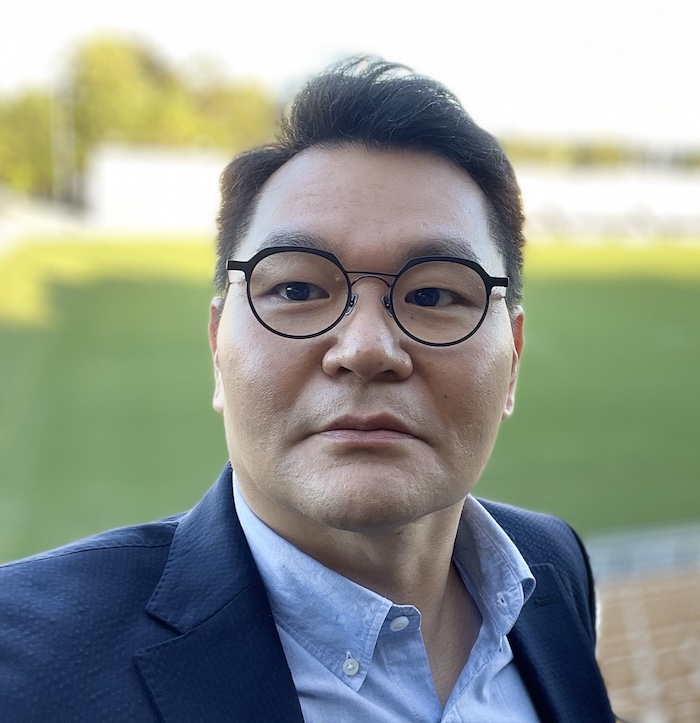
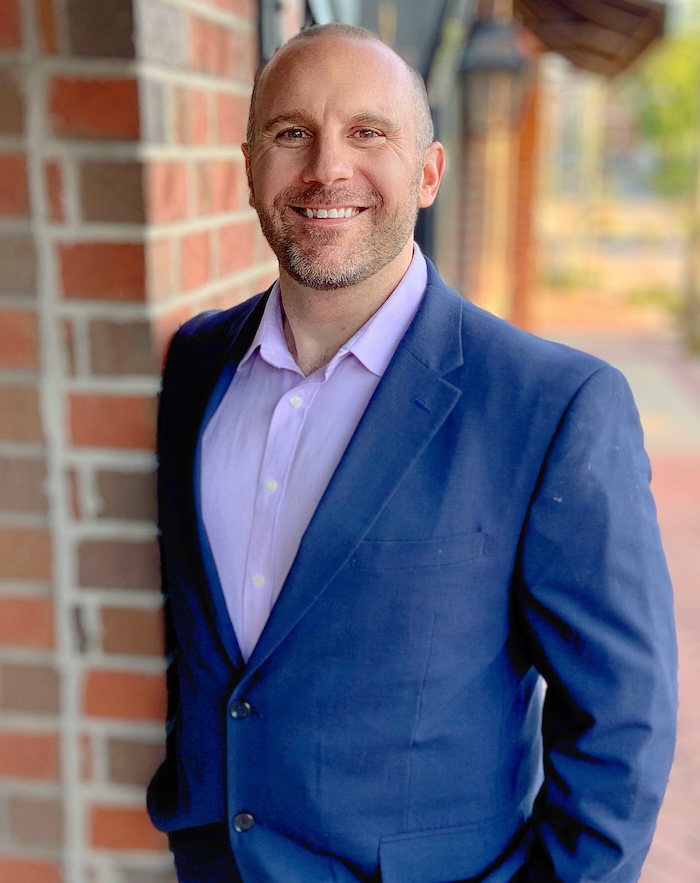
Kyu-soo Chung

Kyu-soo Chung

While the U.S. last hosted the men’s World Cup in 1994 and the women’s World Cup in 1999, Associate Professor of Sport Management Kyu-soo Chung watched with interest when his native South Korea co-hosted the 2002 men’s World Cup with Japan. The country’s team, nicknamed the Taeguk Warriors, put up a strong showing, advancing to the semifinals and whipping the nation’s sporting identity into a frenzy.

Years later, he published research into fan loyalty and experiences, and now he continues that research at KSU, having joined the faculty in 2016.

“I’m interested in studying how sports fans get stimulated by different type of sporting events,” he said. “If you go to live sporting events, of course you watch the game, you hear all the sounds — cheering, announcements, game sounds. Simply, sports fans are exposed to different type of stimuli at a game, then they internally process those stimuli, and they become a more loyal fan of the team.”

Recently, Chung and his colleagues at Georgia State University and Clark Atlanta University hosted multiple symposiums about how college students perceive the United Nations’ Sustainable Development Goals related to the World Cup, particularly from the mental health standpoint. He said they’ll put together a paper and seek publication next year.

“This is a mega sporting event with both positive and negative things about it,” he said. “We want to find out how students feel about those things while being around the event, more of an educational project.”

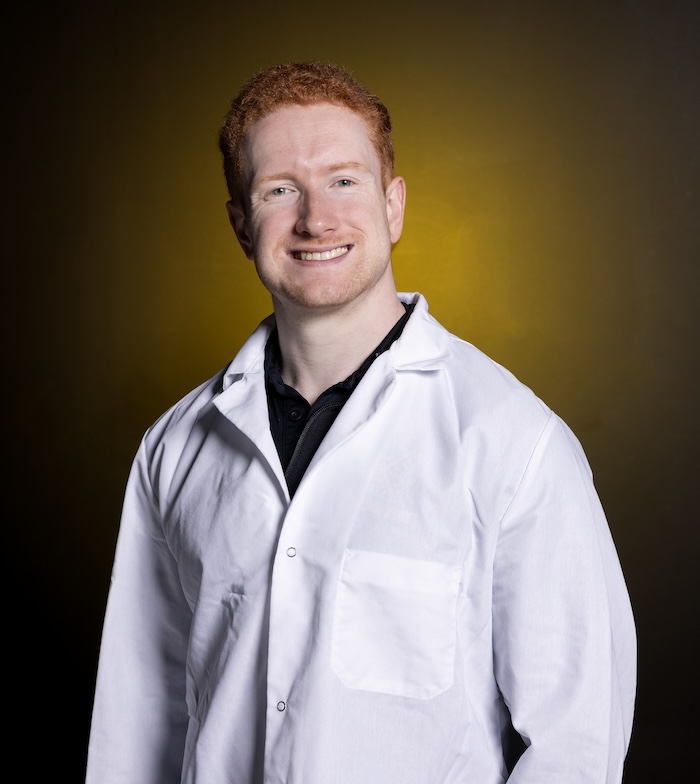
Chad Goebert

Relative to other sports, soccer has historically offered fewer opportunities for statistics. Goals. Assists. Saves. Shots on goal. Fouls. KSU Assistant Professor of Sport Management Chad Goebert challenges his students to create new statistics in a class called Technology and Innovation in Sport.

“I created the class when I came here, and there's no textbook,” he said. “I use my slides as the textbook and we update each year, because with technology and innovation, some things pop out of nowhere.”

Goebert has worked with several companies on the technology aspects, including Opta, which provides player data to most of the European domestic soccer leagues. Most of his focus is on how teams use technology and how fans adopt immersive technologies. He also acknowledged how game officials will use immersive technologies in the World Cup, particularly the referee camera — an ear-mounted camera worn by the referee that will give the remote video assistant referee another angle to view contested calls on the field.

“Sports has always had a data problem, in that they have too much data to process it all, but it’s also a positive having tons of data,” he said. “It's just up to your imagination what you can do with it.”

Chad Goebert
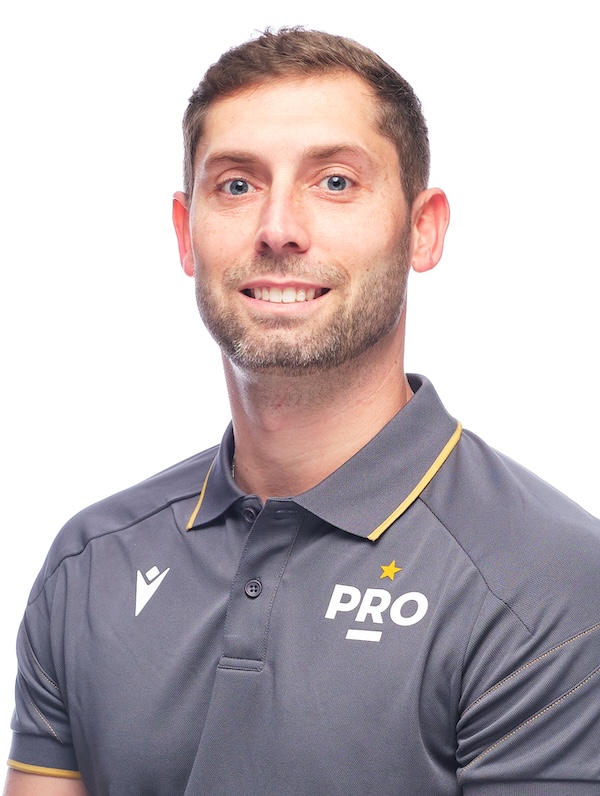
Kevin Huet

Kevin Huet

As an official who has served as an assistant referee in the college and professional ranks, Kevin Huet can attest to the efficacy and influence of the technology on display this summer. The senior lecturer in exercise science says the technology — including the heralded “ref cam” — shows the forward-thinking nature of the sport.

“You can say a lot about the sport of soccer and FIFA, the international governing body, but you can argue that they have embraced technology, and every year there’s some new integration,” he said. “This is the third World Cup with the video assisted referee, and as it continues to grow, especially with the ref cam and what the referee is seeing in real time, that’s a neat thing from the entertainment perspective of soccer. And from what I understand, I think the soccer community has really enjoyed that when it does get pushed out.”

Huet has in fact served as the video assistant referee — this person works in an office in the stadium to examine close plays and let the on-field officials know when a play requires review. Huet called that behind-the-scenes experience an eye-opener to a new dimension of the sport. But he has spent most of his time in the sport carrying a flag along the field’s touchline as an assistant referee.

He has conducted research into making sure soccer officials are up to the physical task of a 90-minute match. Huet has officiated soccer since he was 12 years old and after more than two decades the passion has not abated. Now he has combined the academic and the athletic.

“I've been able to combine my passion with my purpose in those worlds to help our referees at various levels to either get through fitness testing, meet the demands of the sport, or both,” he said. “Understandably, the players, that's who matters, but there is that referee community that does get forgotten about, and we have to do our part to make sure that the game gets the attention to detail it needs.”

Gerald Mangine

With 1,248 world-class athletes taking the fields of North America this summer, Professor of Exercise Science Gerald Mangine can help explain the physical, cognitive, and developmental traits that separate elite soccer players from the rest. Their path to the World Cup is rarely simple or linear, he said. It is usually built through years of technical, tactical, physical, and psychological development, often shaped by repeated cycles of challenge, failure, refinement, and adaptation.

“Soccer players at this level are not just fast or fit,” said Mangine, the Director of the Center for Research on Human Sport Performance and Wellbeing. “They are hybrid intermittent athletes. They have to be lean and powerful, fast over short distances, and able to repeat high-intensity efforts for more than 90 minutes. The exact profile changes by position, but every player needs some combination of speed, strength, power, endurance, and durability.

Mangine said the mental side of elite soccer is just as important. The best players are not only physically gifted; they are exceptional at reading a constantly changing environment, tracking teammates and opponents, anticipating what is likely to happen next, and making decisions in milliseconds.

“That is what makes them special,” he said. “They are better at seeing, deciding, adapting, and surviving the pathway it takes to reach that level.”

Mangine’s work focuses on strength and conditioning, sport science, athlete monitoring, and the use of performance data to improve training, in-game performance, and recovery. He is watching the World Cup to see how soccer players manage fatigue across congested match schedules, and use training, nutrition, recovery, and performance monitoring strategies to stay healthy and competitive.

He also noted that the officiating crews should not be overlooked. Center referees commonly cover around 10 kilometers per match while repeatedly changing speed and direction to stay close enough to make correct decisions. Assistant referees cover less total distance, but still about 5 to 6 kilometers per match, often while sprinting or moving sideways to stay aligned with the offside line, holding a flag, tracking the ball and players, and communicating with the center referee.

“The officials have to be fantastically fit too,” Mangine said. “They are trying to keep up with the best soccer athletes in the world while making constant perceptual decisions under fatigue.”

For Mangine, the World Cup highlights the evolving role of these coaches whose job is no longer simply about building stronger athletes. It requires managing individual training histories, position-specific demands, recovery needs, match congestion, and enormous amounts of performance data.

“The strength and conditioning coach is really an applied sport scientist,” he said. “They are constantly balancing preparation, fatigue, readiness, and recovery while helping translate data into decisions coaches and players can actually use.”

Gerald Mangine
Mitchell Zaplatosch

Mitchell Zaplatosch

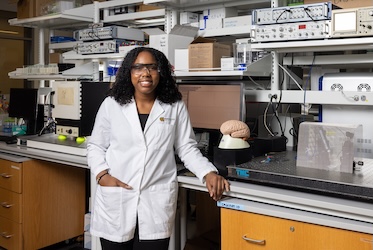
As the World Cup extends through a hot North American summer, Assistant Professor of Exercise Science Mitchell Zaplatosch said the players aren’t the only ones who will need to stay on top of their hydration.

“Georgia heat in general in July is going to be pretty brutal,” he said. “Even soccer fans, active as they are, have different hydration needs than the players, so they still need to prevent fluid loss and stay on top of their hydration.”

Zaplatosch’s research focuses on hydration and fluid intake behaviors while looking at ways to assess hydration status. At KSU’s PechaKucha night, he presented a study into using smart water bottles to change hydration behaviors among college students, something spectators attending World Cup matches this summer might consider.

In addition, Zaplatosch is a registered dietitian and has experience working with teams and athletes, as well as teaching nutrition and performance classes at KSU. He said the teams’ nutritionists will play a critical role in helping players thrive in the heat, starting with determining each player's nutritional and hydrational needs, and then continuing with proper hydration in the days leading up to opening touch.

“A big emphasis for soccer players will be on carbohydrates,” he said. “When you're playing in the heat, you tend to burn through more carbohydrates more quickly, and that’s a response from greater sympathetic nervous system activity. So, carbs are going to be the key here.”

– Story by Dave Shelles

Photos provided and by Katherine Seghers
Related Stories

A leader in innovative teaching and learning, Kennesaw State University offers undergraduate, graduate, and doctoral degrees to its more than 51,000 students. Kennesaw State is a member of the University System of Georgia with 11 academic colleges. The university's vibrant campus culture, diverse population, strong global ties, and entrepreneurial spirit draw students from throughout the country and the world. Kennesaw State is a Carnegie-designated doctoral research institution (R2), placing it among an elite group of only 8 percent of U.S. colleges and universities with an R1 or R2 status. For more information, visit kennesaw.edu.