


KENNESAW, Ga. | Apr 7, 2026

A researcher in Kennesaw State University’s College of Computing and Software Engineering (CCSE), Gaines is developing assistive technologies that help individuals with limited physical movement communicate faster and more efficiently. His research focuses on brain-computer interface systems that allow users to communicate by using electrical signals from the brain instead of physical movement.
The work reflects the caliber of research the University aims to support, combining innovation with real-world impact, CCSE Interim Dean Yiming Ji said.
“Dr. Gaines’ research addresses a real human need and demonstrates how technology can improve quality of life,” Ji said. “His work highlights the power of interdisciplinary collaboration to create solutions that are both innovative and meaningful for society.”
At the center of Gaines’ work is one core challenge: improving communication speed.
“The main problem is communication rate,” Gaines said. “Some systems can be as slow as one to three words per minute, while the average speaking rate is around 150 words per minute.”
Gaines’ system works by using a noninvasive headset that reads electrical activity from the surface of the scalp. Users look at options displayed on a screen, such as groups of letters or suggested words, while the system monitors how the brain responds to each visual stimulus.
By detecting specific patterns in brain activity, the system can determine which option the user is focusing on. That signal is then processed and translated into a selection, allowing the user to build words and sentences without needing to move their hands or eyes.
“It’s a very noisy signal,” Gaines said. “Often it takes several actions from the user just to select a single letter.”
To improve efficiency, Gaines reduces the number of choices a user has to make. Instead of selecting from all 26 letters, users select from grouped letters, while the system uses natural language models to predict the intended word based on context.
“Then we use predictions to figure out what word they’re trying to say,” Gaines said.
That combination of brain-signal detection and predictive text helps reduce the number of steps required to communicate, increasing speed and usability.
Motor impairments can result from conditions such as Amyotrophic lateral sclerosis (ALS), traumatic brain injuries, or strokes, but they often do not affect a person’s ability to think or understand. Without reliable tools, many individuals rely on communication partners or limited methods like eye movements or blinks, which can restrict independence.
“It’s a common misconception that if someone can’t communicate the way most people do, they can’t understand,” Gaines said. “That’s not the case.”
Gaines’ research brings together computer science, neuroscience, and healthcare, requiring expertise in brain signal processing, machine learning, and interface design. For him, the most rewarding part is connecting with potential users.
“Being able to speak with potential users and understand their experiences is what drives the research,” he said.
Moving forward, Gaines is focused on building a working prototype, testing the system, and expanding the research through additional funding.
“Success would be user adoption,” Gaines said. “If people choose to use it as their communication system, then it’s having an impact.”
– Story by Raynard Churchwell
Photos by Darnell Wilburn
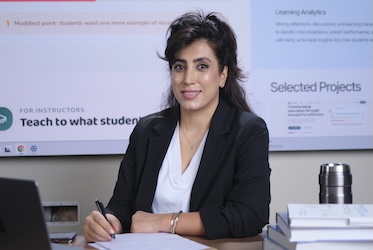
Kennesaw State researcher earns prestigious NSF CAREER Award
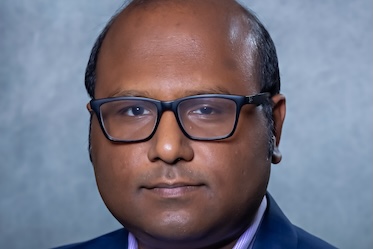
Kennesaw State researcher receives NIH Grant to study sleep apnea
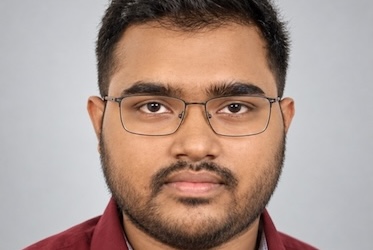
Ph.D. student advances research regarding AI integration with devices with limited computing power
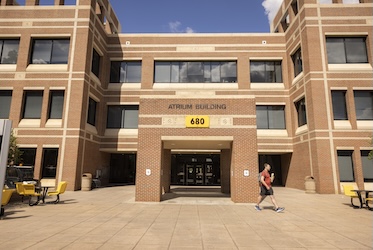
Kennesaw State researcher developing safer, more efficient computing systems for intelligent vehicles
A leader in innovative teaching and learning, Kennesaw State University offers undergraduate, graduate, and doctoral degrees to its more than 51,000 students. Kennesaw State is a member of the University System of Georgia with 11 academic colleges. The university's vibrant campus culture, diverse population, strong global ties, and entrepreneurial spirit draw students from throughout the country and the world. Kennesaw State is a Carnegie-designated doctoral research institution (R2), placing it among an elite group of only 8 percent of U.S. colleges and universities with an R1 or R2 status. For more information, visit kennesaw.edu.

