KENNESAW, Ga. | Apr 20, 2026
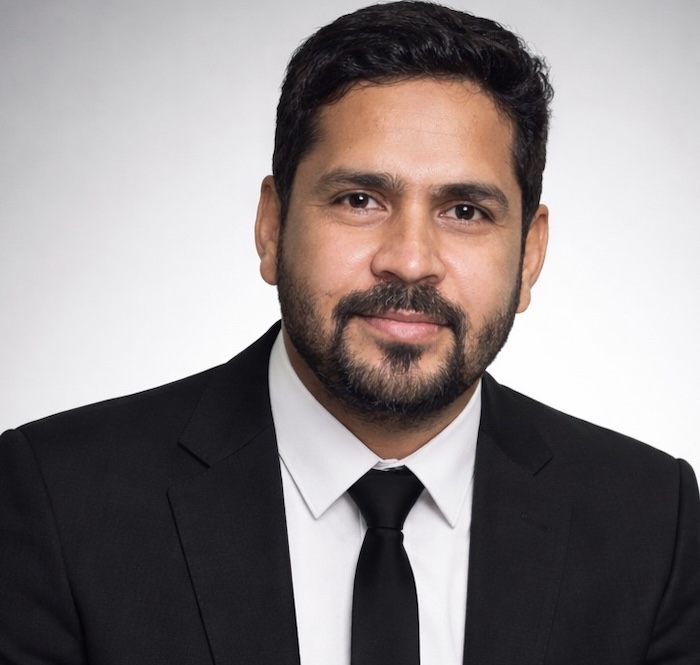
Imran, a faculty member in the College of Computing and Software Engineering and the School of Data Science and Analytics, is leading a study titled “AI-enhanced micro-ultrasound improves detection of clinically significant prostate cancer at biopsy.” The study explores how AI can work alongside high-resolution micro-ultrasound imaging to help doctors better identify aggressive cancers in real time.
“Artificial intelligence is being used in every field, and people are already applying it to disease detection,” Imran said. “Micro-ultrasound is a new technology, and it has not been fully explored, so I wanted to see how we can use AI to detect prostate cancer more accurately.”
Traditional screening methods, such as prostate-specific antigen (PSA) blood tests and digital rectal exams, can indicate the possibility of cancer, but often lead to false positive diagnoses. In many cases, patients undergo biopsies only to learn they do not have cancer.
Imran’s research addresses this challenge by combining machine learning models with micro-ultrasound imaging, which offers resolution comparable to MRI but at a lower cost. His AI system analyzes imaging data to help distinguish between cancerous and non-cancerous tissue, improving diagnostic precision.
“Sometimes biomarkers suggest a patient has cancer, but after a biopsy, it turns out they do not,” Imran said. “That means unnecessary procedures for patients. With this approach, we can reduce misdiagnoses.”
The system works by extracting key features from micro-ultrasound images and combining them with clinical data to train predictive models. In early testing, the AI-assisted approach outperformed traditional biomarkers, particularly in identifying patients who do not have aggressive cancer.
Beyond accuracy, the technology has the potential to streamline the diagnostic process. Using real-time imaging, doctors can evaluate cancer risk and guide biopsy decisions during a single visit, reducing the need for additional tests and lowering overall costs.
“It will reduce the requirement of unnecessary biopsies, reduce the cost, and reduce the pain patients go through,” Imran said. “It will also reduce the time clinicians spend on diagnosing prostate cancer.”
CCSE Interim Dean Yiming Ji said Imran’s work reflects the college’s commitment to applying advanced technologies to real-world challenges.
“This research demonstrates how artificial intelligence can be leveraged to improve healthcare outcomes and make critical diagnostics more accessible,” Ji said. “This work exemplifies the innovative, interdisciplinary approach we strive to foster at Kennesaw State.”
The research is still in its early stages, with testing conducted on a relatively small dataset. Imran plans to expand the study by collecting more data and involving additional medical professionals to validate the approach on a larger scale.
“The next step is to test this on a larger dataset and involve more radiologists to ensure the technique is reliable,” he said.
Since joining Kennesaw State in 2025, he has continued advancing the research while building new infrastructure, including the Intelligent Computing for Advanced Research in Healthcare Lab. KSU has supported the work by providing computational resources such as Graphics Processing Units and research infrastructure to develop and test AI models.
“If validated at a larger scale, this could significantly reduce unnecessary biopsies and improve early detection,” Imran said. “That’s the kind of impact that can truly benefit patients.”
– Story by Raynard Churchwell
Photo provided
A leader in innovative teaching and learning, Kennesaw State University offers undergraduate, graduate, and doctoral degrees to its more than 51,000 students. Kennesaw State is a member of the University System of Georgia with 11 academic colleges. The university's vibrant campus culture, diverse population, strong global ties, and entrepreneurial spirit draw students from throughout the country and the world. Kennesaw State is a Carnegie-designated doctoral research institution (R2), placing it among an elite group of only 8 percent of U.S. colleges and universities with an R1 or R2 status. For more information, visit kennesaw.edu.