


KENNESAW, Ga. | Oct 1, 2026
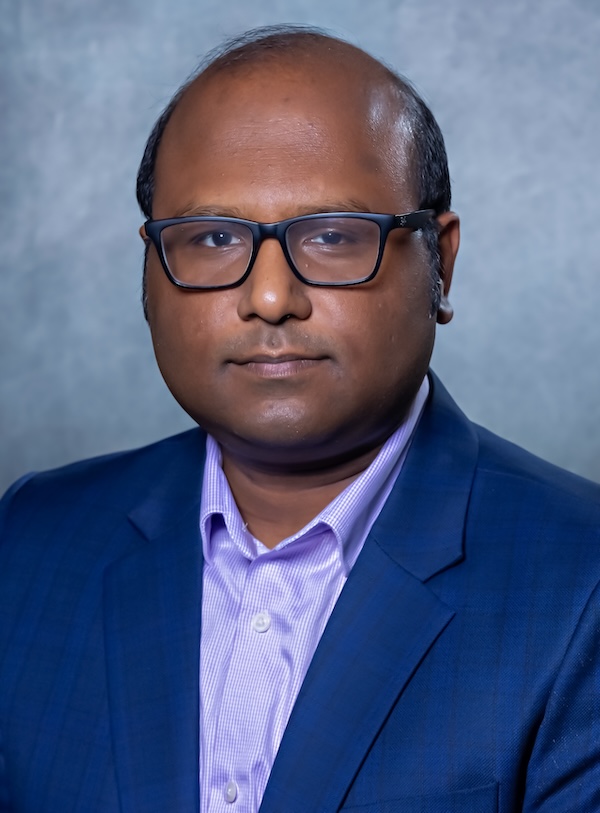
Kennesaw State University researcher Shumit Saha has received a $235,520 grant from the National Institutes of Health (NIH) to develop artificial intelligence tools that analyze snoring patterns to identify where the upper airway collapses during sleep and predict whether patients may respond to hypoglossal nerve stimulation.
Sleep apnea is a chronic disorder in which breathing repeatedly stops and starts during sleep, often because the upper airway becomes blocked. Beyond disrupting sleep, untreated sleep apnea can increase the risk of serious health problems, including high blood pressure, stroke, and heart failure.
Continuous positive airway pressure, commonly known as CPAP, is a common first-line treatment for sleep apnea. However, Saha, an assistant professor in the College of Computing and Software Engineering, explains that some patients find the required mask uncomfortable and difficult to use consistently. Other treatment options include devices that reposition the jaw, surgery, and hypoglossal nerve stimulation, which uses electrical stimulation to help keep the airway open.
The challenge, Saha explained, is determining which treatment will work best for each patient.
“Not every treatment is applicable to every person,” he said. “Some people respond to one type of treatment, while others respond to another. If we can predict that beforehand, patients may not have to go through trial and error with multiple treatments.”
The project has two primary goals. First, Saha will investigate whether snoring sounds can identify the dominant location of a patient’s airway collapse. The airway can become obstructed at several locations, including the soft palate and the base of the tongue. Knowing where the collapse occurs can help physicians select the most appropriate treatment.
“Typically, to identify the location of the collapse, doctors have to put patients under sedation to induce sleep and insert a flexible camera through the nose — a process that is resource-intensive and invasive,” Saha said.
He hopes snoring analysis could eventually provide physicians with a less invasive and more accessible source of information.
The second goal is to determine whether snoring patterns can predict a patient’s response to hypoglossal nerve stimulation, a treatment that stimulates the nerve, activating tongue and upper airway muscles to keep airway open.
For the study, Saha will analyze snoring data collected by collaborators at Brigham and Women’s Hospital and Harvard Medical School using machine-learning and deep-learning models to look for patterns associated with different obstruction sites and treatment outcomes.
His end goal is to develop an AI approach that could ultimately support a clinical tool to analyze snoring sounds and generate a report estimating the likely site of an airway obstruction and whether a patient may respond to a particular treatment.
“It could reduce the trial-and-error process and give physicians a clinical decision support report beforehand,” Saha said. “The greatest benefit would be for patients because this could help physicians make more informed treatment decisions earlier. By providing additional information before treatment is selected, it could potentially save time, reduce costs and lower the overall burden of care.”
This study is funded by NIH Grant No: 1R21HL188520-01
– Story by Christin Senior
Photo provided
Kennesaw State researcher receives $250,000 NSF grant to enhance construction education
NSF-funded research aims to make AI a more reliable tool for heart testing
Kennesaw State researcher brings AI lessons to life with shark teeth

Engineering student creates robotic hand designed to track patient health
A leader in innovative teaching and learning, Kennesaw State University offers undergraduate, graduate, and doctoral degrees to its more than 51,000 students. Kennesaw State is a member of the University System of Georgia with 11 academic colleges. The university's vibrant campus culture, diverse population, strong global ties, and entrepreneurial spirit draw students from throughout the country and the world. Kennesaw State is a Carnegie-designated doctoral research institution (R2), placing it among an elite group of only 8 percent of U.S. colleges and universities with an R1 or R2 status. For more information, visit kennesaw.edu.

