KENNESAW, Ga. | Mar 2, 2026
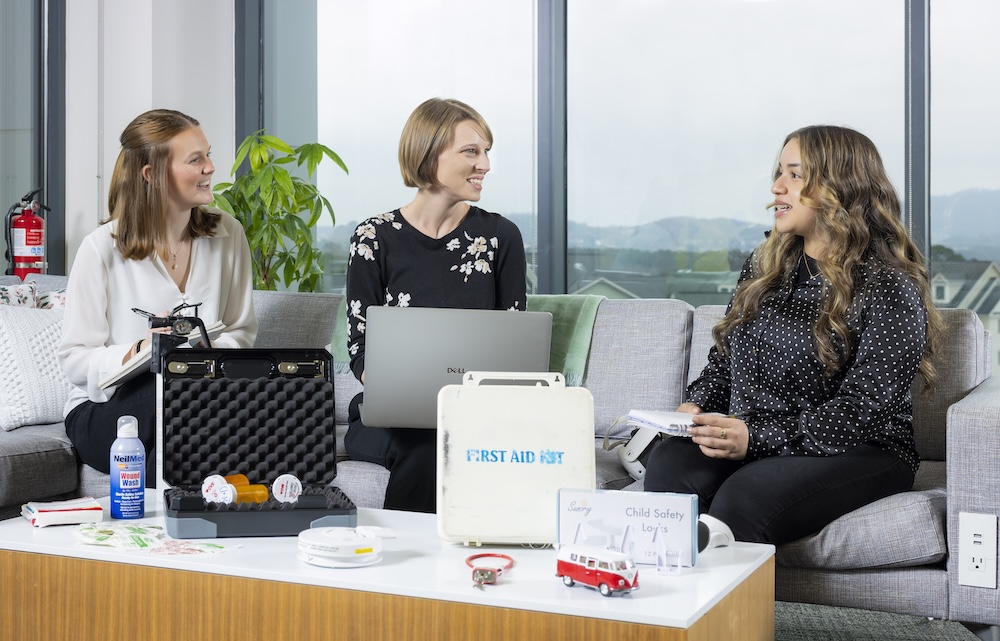
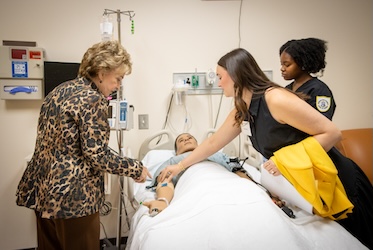
Established by Assistant Professor of Nursing Melissa Osborne, the SKYE Research Lab – which stands for “Safety and wellbeing of Kids and Youth in the home Environment” – aims to reduce injuries among children and youth. The mission is deeply personal for Osborne who, as a parent, is motivated to better protect the home environment. Her lab uses a combination of technology, epidemiology, and public health research to better understand and ultimately prevent home injury.
“I know first-hand home safety can be challenging, especially when you have those little ones and they start getting mobile,” she said. “Those first five years are especially tricky, so I come at it from a personal standpoint. But as also a researcher, I know that this is an important thing we need to tackle to prevent child injury and have an impact at a population level.”
Injury is the leading cause of death among children in the U.S., and for the youngest children, unintentional injuries are especially prominent. To address this, the SKYE Research Lab has embarked on a three-pronged mission:
In addition to tackling pressing national issues, the SKYE Research Lab has also proven to be fertile grounds for student researchers. Among the many examples of research coming out of the lab is a project led by KSU junior Allison Martinez and sophomore Sharon Pradeep, who are investigating data on parental attitudes regarding secure home storage of firearms. They analyzed survey answers and produced a report that they presented at last fall’s Symposium of Student Scholars with Osborne’s help.
Now Martinez, a Douglasville native studying integrated health science, has continued research with Osborne and has embraced her new role.
“I'm very used to collecting data hands-on because I've done a microbiology project in the past, but I learned that I can also slow down, read research papers and do the more intricate parts of research like the literature review,” said Martinez. “If I can be part of preventing child injury, it'd be something impactful.”
Originally an environmental science major, Martinez made the switch to integrated health science last summer and sought research opportunities. She was intrigued by Osborne’s immersive virtual reality project that puts parents in a virtual home setting and asks them to identify hazards, including but not limited to firearms.
The project is called ParentSHIELD-VR, and it puts users in various home settings, such as the kitchen, bathroom, or bedroom. It allows the user to make decisions in real time for how to reduce risks in the home. Osborne said the goal was to find a more engaging way to address safety in the home, and VR proved the right avenue.
“Oftentimes when it comes to home safety education, parents get either a brief talk or a pamphlet on how to keep things safe at home and that's it. We know that’s not how people change their behavior,” she said. “With young children, supervision is so important and parents don't always get the chance to practice that. This virtual reality program will allow them to engage supervision practices in a low-risk environment.”
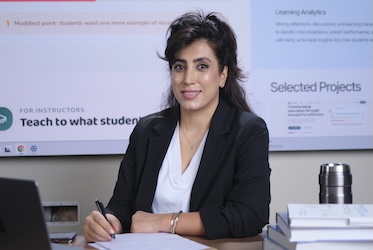
Osborne touted the interdisciplinary nature of the VR project, working with two professors from the College of Computing and Software Engineering – Lei Zhang and Brooke Zhao – as well as Allison Garefino, Research Scholar and the director of the Children and Family Programs in the Wellstar College of Health and Human Services.
Along with Martinez, Osborne has helped undergraduate students with research projects. A graduate research assistant, Caroline King, has joined the lab too, having completed a bachelor’s degree in psychology at Florida State University and now pursuing a Master of Social Work. King wants to work with children as a counselor, and Osborne’s focus on preventing child injury, while a different path, appeals to King’s goal.
“In social work, helping the greater good and the greater population is really big for my interest,” King said. “The moment I read her synopsis before I interviewed with her, I decided this is exactly what I want to do.”
While Martinez hasn’t worked on the VR project, she has found a new research focus with Osborne’s latest project. Osborne and the SKYE Research Lab have joined forces with the National Center on Child Trafficking (NCCT) at Georgia State University on grant from the Substance Abuse and Mental Health Services Administration (SAMHSA) on the innovation and dissemination of trauma treatment and training of professionals across child-serving systems to meet the needs of trafficked children and their families.
Martinez hopes to become a trauma nurse someday, following on from her work with the NCCT. Though her work on the child trafficking project has just begun, and she anticipates graduating in Fall 2028, Martinez said she’ll absorb all the information she can with Osborne and the SKYE Research Lab.
“I can connect that to my major in wanting to prevent trauma and informing parents,” Martinez said. “I'm not yet sure about my specialty in nursing, but I can appreciate that I have something a little different in terms of experience with nursing and being involved in research.”
– Story by Dave Shelles
Photos by Matt Yung
A leader in innovative teaching and learning, Kennesaw State University offers undergraduate, graduate, and doctoral degrees to its more than 51,000 students. Kennesaw State is a member of the University System of Georgia with 11 academic colleges. The university's vibrant campus culture, diverse population, strong global ties, and entrepreneurial spirit draw students from throughout the country and the world. Kennesaw State is a Carnegie-designated doctoral research institution (R2), placing it among an elite group of only 8 percent of U.S. colleges and universities with an R1 or R2 status. For more information, visit kennesaw.edu.