KENNESAW, Ga. | Jul 31, 2026
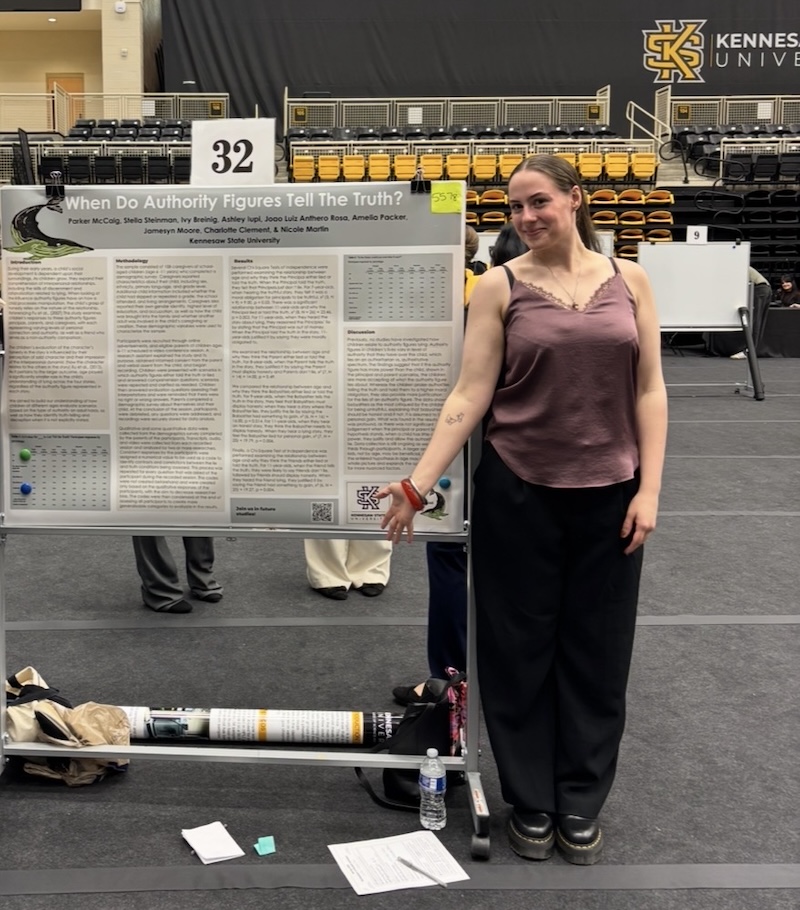
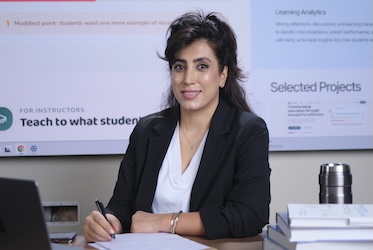
Kennesaw State University psychology student Charlie Clement is examining how children ages 6 to 11 interpret lies told by people with varying levels of authority. Her preliminary findings suggest that in the relationships where the children perceive themselves to have less power, they are more willing to accept and justify these lies from their authority figures.
“I assumed that the kids would be a little bit more black and white — lying is wrong and telling the truth is good,” Clement said. “I didn’t realize there was a lot more nuance, especially at such a young age.”
Clement, a rising sophomore, works under the mentorship of Nicole Martin, an associate professor of psychology in the Norman J. Radow College of Humanities and Social Sciences. The project began through KSU’s First-Year Scholars Program and continued this summer through the Office of Undergraduate Research’s Summer Undergraduate Research Program (SURP), an eight-week program that allows students to focus full time on research under the guidance of a faculty mentor.
For the study, Martin and Clement had children participate in video interviews after listening to four stories featuring a parent, principal, babysitter or friend. In each story, the character either lies or tells the truth. The researchers then ask the children whether they recognized the lie, why they believe the character lied and whether they would trust that person in the future.
“The parent and principal represent the highest levels of authority in the study,” Clement explained. “While the babysitter represents a less powerful authority figure, and the friend serves as a neutral comparison.”
According to Clement, children as young as 6 generally recognize when a parent or principal in the stories is lying. Many said they would not trust that person in the future, but because they do not have the autonomy and power in the relationship, they still choose to accept these lies.
“However, the kids are very harsh when it comes to the babysitter or the friend stories,” Clement said. “They’re like, ‘They should never lie. Friends should not lie.’ They think the person lied to win the game or for some other personal gain.”
Clement said these preliminary findings show that children consider the speaker’s authority and perceived motivation when they are evaluating truthfulness or dishonesty. She hopes the findings will encourage parents and caregivers to think more carefully about honesty, including seemingly harmless white lies.
“Your kids notice it more than you think,” Clement said. “As soon as they realize that you’re lying, they’re making the choice to either continue to trust you as their trusted adult or pull back a little.”
The research may also help mental health professionals better understand how children process dishonesty by adults they depend on. Clement said that the children’s willingness to accept lies from their caregivers and other authority may help explain why children do not always disclose abuse or neglect quickly, particularly when they are aware they do not hold autonomy and power with their high authority figures.
Because the children answer open-ended questions, much of Clement’s work this summer involves reviewing interview recordings and coding responses. For Clement, the SURP program presented a unique opportunity to gain hands-on research experience early in her college career.
“I love researching. I’m really nosy; that’s honestly what it is,” she said. “I like to contribute knowledge, and when I have questions, I like to find the answers myself. The SURP program gives us as students such a unique opportunity to focus on one thing and accomplish in eight weeks what might otherwise take many months.”
Once the remaining data have been analyzed, the team plans to submit their findings for publication.
– Story by Christin Senior
Photo provided
A leader in innovative teaching and learning, Kennesaw State University offers undergraduate, graduate, and doctoral degrees to its more than 51,000 students. Kennesaw State is a member of the University System of Georgia with 11 academic colleges. The university's vibrant campus culture, diverse population, strong global ties, and entrepreneurial spirit draw students from throughout the country and the world. Kennesaw State is a Carnegie-designated doctoral research institution (R2), placing it among an elite group of only 8 percent of U.S. colleges and universities with an R1 or R2 status. For more information, visit kennesaw.edu.