KENNESAW, Ga. | May 28, 2026
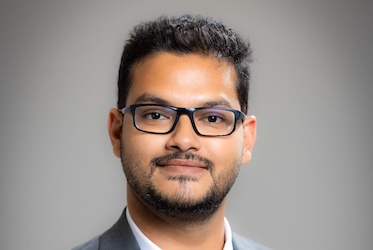
Kennesaw State University student Josiah Ware is helping turn CT scans into digital models of the human heart, research that could one day help doctors detect problems faster and personalize treatment for patients.
Under the guidance of Associate Professor of Mechanical Engineering Lei Shi in KSU’s Southern Polytechnic College of Engineering and Engineering Technology (SPCEET), Ware is helping develop patient-specific virtual heart models using machine learning and advanced imaging. The research uses CT scans to reconstruct detailed representations of the human heart, which are then analyzed through computational modeling and finite element analysis to simulate how the organ functions under different conditions.
The work could ultimately help medical professionals diagnose heart conditions more efficiently and tailor treatments to individual patients.
A graduate of Roswell High School and current KSU Journey Honors College student, Ware discovered Shi’s research project during his freshman year through KSU’s First-Year Scholars Program, which connects undergraduate students with faculty-led research.
“I’ve always been interested in biomedical sciences and the intersection of engineering and health,” said Ware, a mechanical engineering student. “This project just immediately stood out to me.”
At the center of the project is digital twin technology, which allows researchers to create virtual models of real-world systems and study how they function. Once converted into digital models, researchers can run simulations to identify heart issues that may not be visible through traditional imaging alone. The technology also allows researchers to incorporate patient-specific data, creating more personalized models that could help improve treatment outcomes.
“The cool thing about it is that you can take patient-specific data from CT scans and simulate how an actual person’s heart works,” Ware said. “Everybody’s body structure is slightly different, so being able to personalize treatment can lead to better outcomes.”
Ware’s role focused on the early stages of the modeling process using software programs SimVascular and Meshmixer. He worked with CT scan images to create and refine 3D models of the heart before preparing them for finite element analysis, a computational process used to simulate real-world behavior.
SPCEET Dean Lawrence Whitman said Ware’s work demonstrates the type of research opportunities available to undergraduate students at Kennesaw State.
“Research experiences like this allow our students to apply engineering concepts to real-world challenges that can directly impact people’s lives,” Whitman said. “Josiah’s work demonstrates how undergraduate students at Kennesaw State are contributing to innovative research while preparing for engineering careers in healthcare applications.”
Ware said one of the challenges during the project was learning machine learning concepts while actively conducting research. Despite the steep learning curve, the experience strengthened his technical knowledge and taught him perseverance.
“Nothing works the first time,” Ware said. “This experience has taught me perseverance and how to push through errors and failures. I think dealing with those challenges this early will help prepare me for my future career.”
– Story by Raynard Churchwell
A leader in innovative teaching and learning, Kennesaw State University offers undergraduate, graduate, and doctoral degrees to its more than 51,000 students. Kennesaw State is a member of the University System of Georgia with 11 academic colleges. The university's vibrant campus culture, diverse population, strong global ties, and entrepreneurial spirit draw students from throughout the country and the world. Kennesaw State is a Carnegie-designated doctoral research institution (R2), placing it among an elite group of only 8 percent of U.S. colleges and universities with an R1 or R2 status. For more information, visit kennesaw.edu.