


KENNESAW, Ga. | Feb 23, 2026
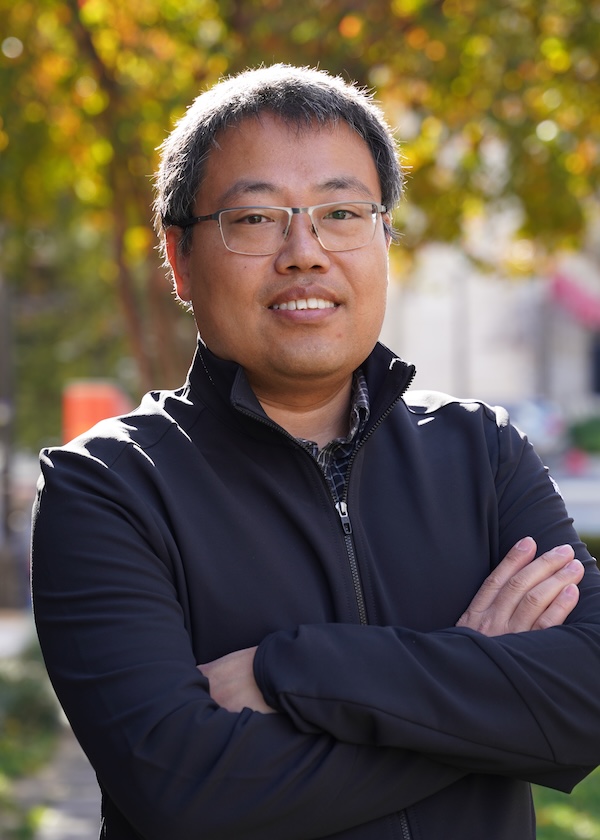
Zhang’s work aims to deliver scientific insights in a fraction of the time. Instead of constantly moving data to a processor for computation, his project moves the computation closer to where the data already lives. This approach, known as computational storage, allows portions of data processing to happen directly on storage devices before information ever reaches the main processor.
“When we train scientific machine-learning models, we need a lot of data,” Zhang said. “Moving that data from storage to processors takes time, and preprocessing can become a major hurdle.”
By shifting where work is completed, researchers can reduce delays that often slow artificial intelligence training and large-scale scientific simulations, especially when datasets grow into the terabyte and petabyte range. The long-term impact of Zhang’s project extends beyond computer science. Faster data processing can shorten the time it takes scientists to reach conclusions in fields ranging from climate modeling to medical research. A simulation that once required hours or even days could potentially be completed in significantly less time, allowing researchers to test more scenarios and refine their findings more quickly.
“In the future, supercomputers will be more heterogeneous and specialized,” Zhang said. “Different components will handle different tasks, and that flexibility will open the door to faster and more scalable scientific applications.”
Zhang’s project received a $479,358 grant from the National Science Foundation (NSF) to support the research over the next three years. The funding supports doctoral students at KSU, provides access to high-performance computing resources, and enables the team to present findings at national conferences while strengthening curriculum offerings for students.
The investment also helps create opportunities for undergraduate researchers to gain early exposure to advanced computing systems and real-world problem-solving, Zhang said.
“This funding allows us to build a pipeline for our students and give them hands-on experience with state-of-the-art systems,” Zhang said. “It is not only about research results, but also about preparing students for careers in high-performance computing and artificial intelligence.”
The research is a collaboration with Xiaokun Yang of the University of Houston–Clear Lake. The partnership blends hardware and software expertise, which Zhang said is essential for building efficient systems.
Leaders in the College of Computing and Software Engineering say Zhang’s work highlights the growing impact of faculty research on both student learning and technological innovation.
“Dr. Zhang’s work reflects the type of forward-thinking research we strive to cultivate in the College of Computing and Software Engineering,” CCSE Interim Dean Yiming Ji said. “His efforts advance scientific discovery while creating meaningful learning opportunities for our students.”
After joining KSU, Zhang began building the AI Systems and Storage Lab on the Marietta Campus, where he is assembling servers and recruiting doctoral students. Early testing has reinforced the team’s belief that data preprocessing can become a barrier in large-scale computing workflows. He expects the lab to expand in the coming semesters as additional graduate researchers join the project.
– Story by Raynard Churchwell
Photo provided
Kennesaw State researcher earns prestigious NSF CAREER Award
Kennesaw State researcher receives NIH Grant to study sleep apnea
Ph.D. student advances research regarding AI integration with devices with limited computing power
Kennesaw State researcher developing safer, more efficient computing systems for intelligent vehicles
A leader in innovative teaching and learning, Kennesaw State University offers undergraduate, graduate, and doctoral degrees to its more than 51,000 students. Kennesaw State is a member of the University System of Georgia with 11 academic colleges. The university's vibrant campus culture, diverse population, strong global ties, and entrepreneurial spirit draw students from throughout the country and the world. Kennesaw State is a Carnegie-designated doctoral research institution (R2), placing it among an elite group of only 8 percent of U.S. colleges and universities with an R1 or R2 status. For more information, visit kennesaw.edu.

