


KENNESAW, Ga. | Nov 18, 2026
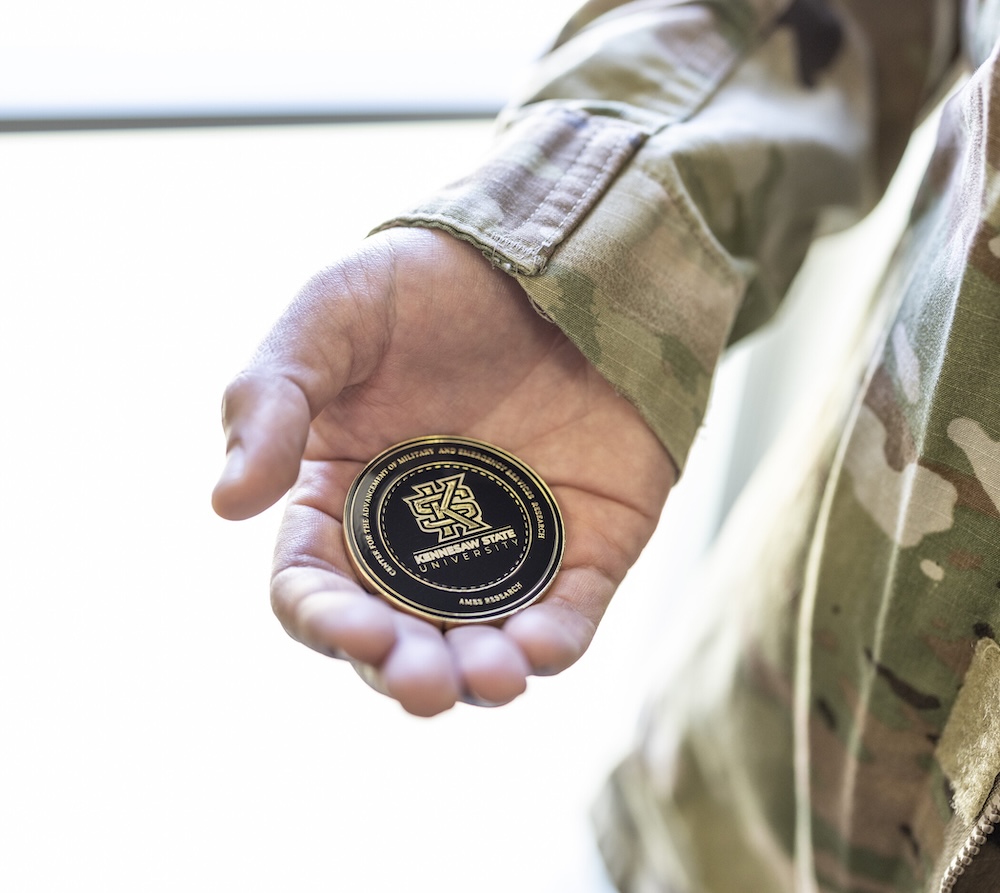
Each photo is labeled with the title “Profiles of Resilience” and includes personal stories from veterans, first responders, and their families about overcoming challenges that stem from high-stress occupations. When AMES Center Director Brian Moore brings visitors around the office, he explains who the people are, knowing each story.
"We see a lot of heavy stuff, and it’s important that we showcase how veterans, first responders, and their loved ones overcome very real, very difficult challenges,” Moore said.
The work is personal for Moore, who served 17 years as an infantry officer in the Army. After leaving active duty, he earned his Ph.D. in psychology and completed a trauma fellowship at the University of Texas Health Science Center San Antonio.
“When I came to Kennesaw State in 2020, there was very little military or first responder research happening,” he said.
Since then, the center’s growth and impact have expanded significantly, establishing Kennesaw State as a national leader in community-engaged research supporting those who serve others.
Four years after its founding, the AMES Center earned national recognition from the Association of Public and Land-Grant Universities (APLU) when it was awarded the Public Impact Research Award for veteran and first responder suicide prevention research. The award recognizes institutions that have implemented one or more impactful Public Impact Research efforts and produced exceptional outcomes. An AMES Center initiative funded by the Centers for Disease Control and Prevention (CDC) targeting first responders achieved up to 70% reductions in suicidal ideation, far exceeding the expected goal of 10%.
In partnership with the Georgia Department of Veterans Services, the AMES Center also co-hosts Georgia’s statewide suicide prevention summit and has supported the development and launch of the state’s first-ever Suicide Mortality Review Board focused on veteran deaths by suicide.
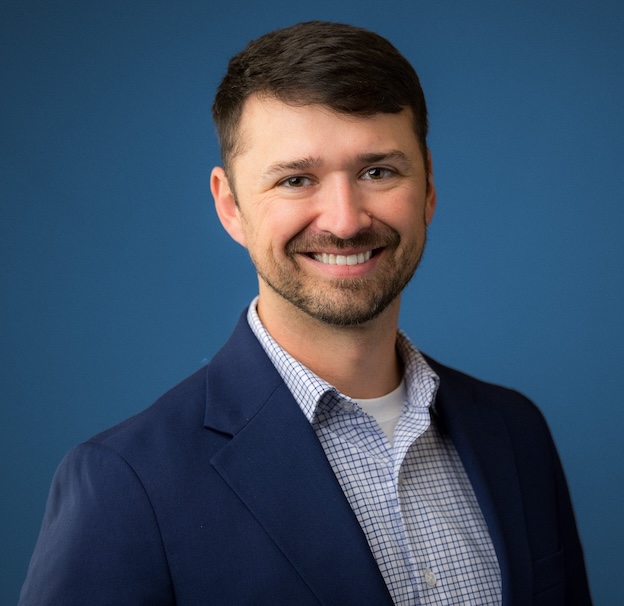
Since 2021, the AMES Center has partnered with community agencies and academic partners to secure more than $15 million in external funding, published more than 70 peer-reviewed papers, and established partnerships with nearly a dozen KSU units and over 50 government and nonprofit agencies across nine states and Puerto Rico.
Mark Binicewicz, a Navy veteran and deputy police chief at the Smyrna Police Department, has seen the benefits of this work firsthand.
"We tragically had a couple of officer suicides within about six months of each other, and we realized we needed help,” Binicewicz said.
Staff from the AMES Center partnered with the department using grant funding from the Department of Justice and the CDC. They performed an organizational health assessment for the department, analyzed the data, and have offered expanded well-being and resilience programming for their employees for the last four years.
Little by little, trust was built; clinicians embedded in the department to have non-clinical conversations to get to know the employees. They have also implemented training on the importance of basic needs that may go to the wayside when working 12-hour shifts like sleep, substance use and abuse, and financial well-being.
“It’s so important to invest in the health of your people,” Binicewicz said. “This is a way for us to show our employees how much we care about them. Life is hard, and in our line of work, we often experience trauma, and we must have training and people in place to help work through those experiences in real time.”
Moore said the suicide prevention programming focuses on risk factors.
“Our program almost never discusses suicide,” he said. “What we do is we understand why people feel suicide is the answer for them at that time. And then we work backward to reduce those risk factors for them. Our Community Innovation program is really about understanding housing issues, financial insecurity issues, food insecurity, family dysfunction or conflict management issues. We’re trying to catch people early enough that we can train them in basic life skills.”
As the AMES Center continues expanding its partnerships across Georgia and beyond, Moore remains focused on the people. The veterans, first responders, and families featured in the Profiles of Resilience displays serve as a daily reminder of the people behind the research and the reason the work matters.
“There is nothing more valuable to me than helping others, and that’s what our work does,” Moore said.
– Abbey O’Brien Barrows
Photos by Darnell Wilburn and provided

KSU students prepare to deliver research findings at Fall Symposium of Student Scholars

KSU researcher joins NSF-funded collaborative project to improve emergency communications
KSU researcher receives NIH grant to study 'forever chemicals'
Faculty bring research to life for community leaders at PechaKucha Night
A leader in innovative teaching and learning, Kennesaw State University offers undergraduate, graduate, and doctoral degrees to its more than 51,000 students. Kennesaw State is a member of the University System of Georgia with 11 academic colleges. The university's vibrant campus culture, diverse population, strong global ties, and entrepreneurial spirit draw students from throughout the country and the world. Kennesaw State is a Carnegie-designated doctoral research institution (R2), placing it among an elite group of only 8 percent of U.S. colleges and universities with an R1 or R2 status. For more information, visit kennesaw.edu.

