KENNESAW, Ga. | Mar 18, 2026
There have only been a handful of reactor meltdowns throughout the history of nuclear engineering, but the 1986 explosion at the Chernobyl Nuclear Power Plant in Ukraine and the 2011 Fukushima Daiichi nuclear disaster are among the most notable.
At Kennesaw State University, researchers are working to change the future of nuclear energy and disaster cleanups.
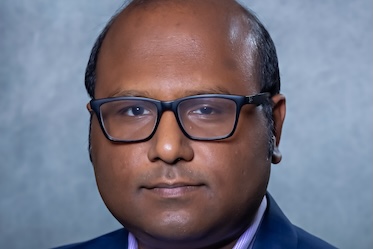
Eduardo Farfan, professor of nuclear engineering, is focusing on environmental radiation monitoring, radioactive waste management, and radiological risk assessment.
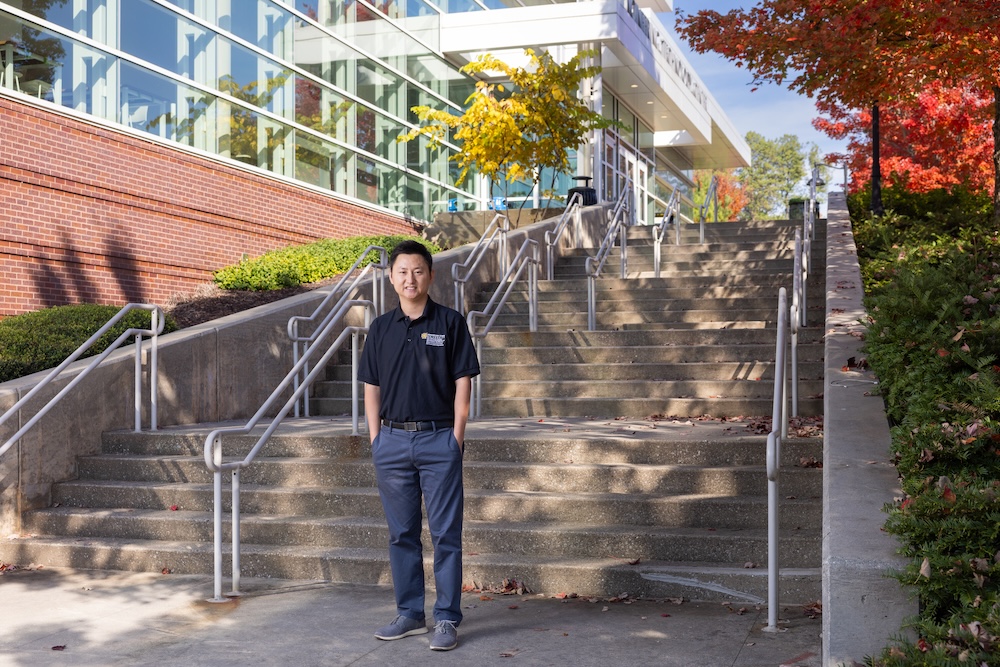
Meanwhile, Assistant Professor of Engineering in Smart Infrastructure Da Hu is using technologies such as drones, sensors, and artificial intelligence to advance disaster response and structural damage assessment.
Farfan has studied the changes in the environment of the abandoned city of Pripyat, which was developed in 1970 by the Soviet Union as an “atomgrad” or atomic city. When the reactor exploded, Pripyat faced the brunt of the radiation after the explosion.
Following the disaster, the entire city had to be evacuated. If one were to walk through today, they could still see left out cups of coffee, meals still on tables, and abandoned belongings that were left behind in the hurry to escape the growing threat of radiation poisoning.
The Chernobyl exclusion zone is one of the most important real-world laboratories for studying the long-term environmental consequences of nuclear accidents. It provides scientists with the opportunity to examine how unstable atoms, known as radionuclides, migrate through soil, water, plants, and animals.
“I have studied how radionuclides migrate through soil and building materials following nuclear accidents, how radiation affects ecosystems, and how advanced radiation detection technologies can help locate contamination in nuclear facilities,” Farfan said.
Farfan is looking specifically at cesium‑137 and strontium‑90, which have half-lives of approximately 30 years, and imitate minerals that are essential to human life like potassium and calcium. This allows the radionuclides to settle into the body’s soft tissue and bones. Due to the instability of these atoms, they pave the way for health complications from autoimmune diseases to cancer, and the presence of them in the environment increases those risks.
The Chernobyl exclusion zone is widely considered to be the most radioactive area on Earth, but it is far safer now than it was even a decade ago. At this point the radiation a person would be exposed to wandering around Pripyat is roughly the same as receiving 20-30 times less radiation than a single X-ray, so the area is considered safe for short-term visits.
Farfan’s work involves studying the penetration of radionuclides into Pripyat’s buildings.
“The research showed how radioactive contamination can migrate deeper into building materials over time,” Farfan said. “If someone visited the Chernobyl exclusion zone today, they would see abandoned towns, recovering forests, and numerous research sites where scientists continuously monitor radiation levels and ecological impacts.”
So how can we better clean the environment following a disaster of this magnitude?
First, we must inspect the damage on the ground.
Scientists are currently using satellite images, ground sensors, and other remote sensing technologies to analyze disaster areas.
However, Hu’s work could speed up analyses of effected areas exponentially through artificial intelligence and machine learning.
Remote sensing and machine learning allow researchers to rapidly assess large amounts of visual data, such as aerial images, helping responders understand the situation faster and allocate resources more effectively.
“Machine learning models can analyze thousands of images quickly and automatically identify patterns associated with structural damage,” Hu said. “This helps researchers and responders detect damaged buildings more efficiently than manual inspection alone.”
Even small improvement in data collection and analysis can have major impacts when it comes to response time in critical moments.
These improvements can help agencies gain faster situational awareness, allocate resources more efficiently, and make informed decisions during emergency response, ultimately improving safety and recovery outcomes for affected communities.
As the world embraces nuclear power to generate energy, and as natural disasters happen more frequently, KSU researchers are committed to using the lessons from past events to create new innovations that inform the future.
– Story by Alyssa Ozment
Photos by Matt Yung
A leader in innovative teaching and learning, Kennesaw State University offers undergraduate, graduate, and doctoral degrees to its more than 51,000 students. Kennesaw State is a member of the University System of Georgia with 11 academic colleges. The university's vibrant campus culture, diverse population, strong global ties, and entrepreneurial spirit draw students from throughout the country and the world. Kennesaw State is a Carnegie-designated doctoral research institution (R2), placing it among an elite group of only 8 percent of U.S. colleges and universities with an R1 or R2 status. For more information, visit kennesaw.edu.