KENNESAW, Ga. | May 13, 2026
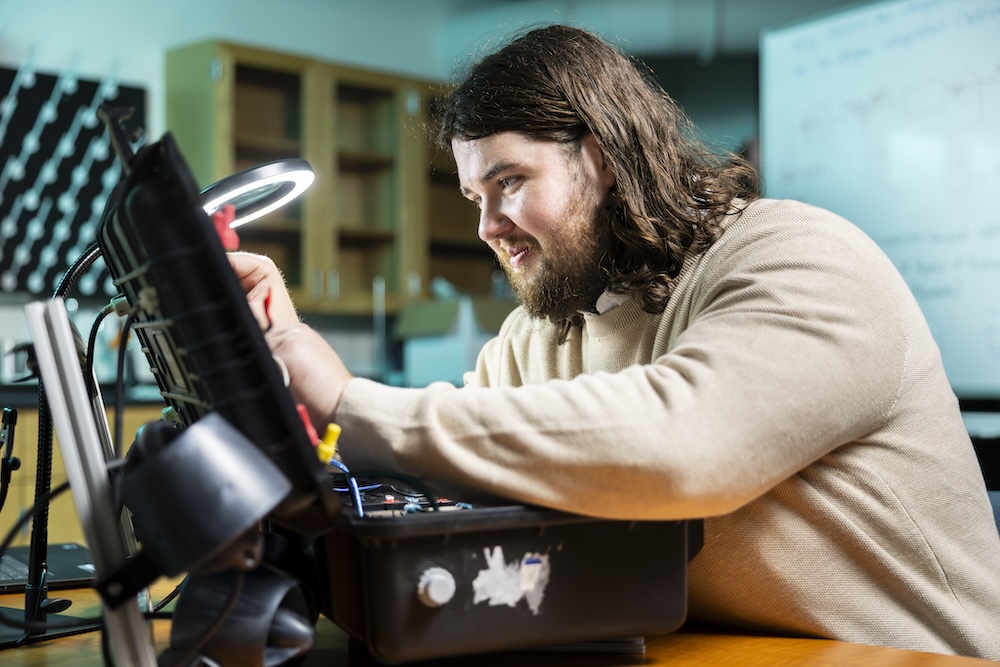
“I’ve definitely pushed through a lot of things,” Quarles said. “You can’t let difficult situations win. You have to keep going.”
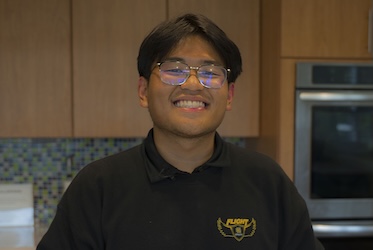
Originally from Lawrenceville, Georgia, Quarles developed an early interest in engineering through his father, who worked at Lockheed Martin for two decades. As a child, he recreated aircraft designs with LEGO bricks, building models while developing a curiosity for how complex systems function.
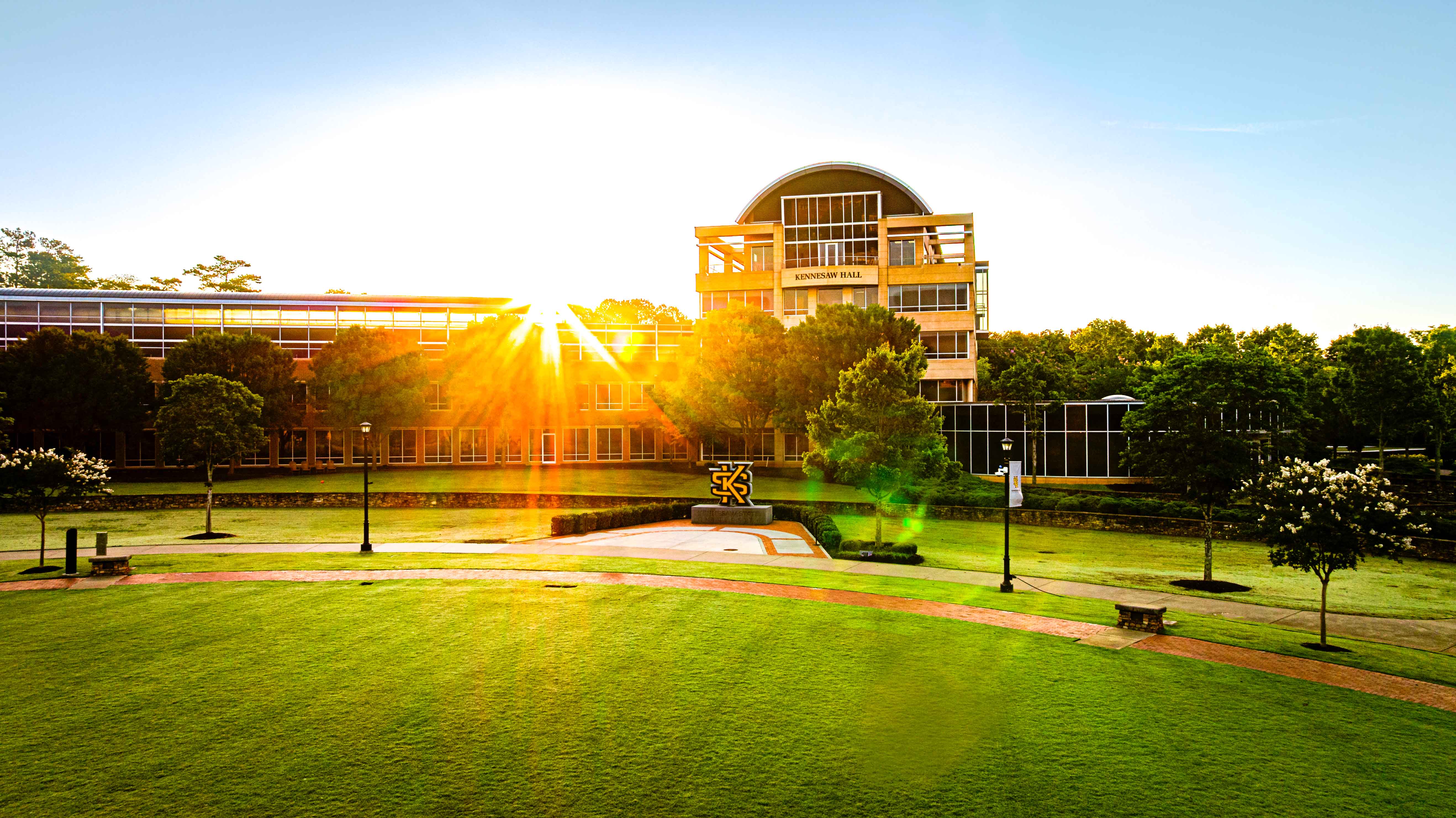
That curiosity followed him into college. After graduating high school in 2019, Quarles started his academic journey at Georgia Gwinnett College before transferring to Kennesaw State to pursue engineering, with interests spanning mechanical, electrical and software engineering principles and mechatronics systems. The move gave him access to a hands-on environment where he could apply classroom concepts to real-world problems.
“I just liked figuring things out,” Quarles said. “I think I always had that engineering mindset.”
At Kennesaw State, Quarles found a supportive academic community within the Southern Polytechnic College of Engineering and Engineering Technology, one that encouraged exploration and growth. Faculty helped guide him toward research opportunities, while the collaborative environment pushed him to stay engaged and challenge himself.
That experience led him into research focused on sustainability and robotics. Among his most notable works was an AI-powered trash-detection system designed to identify waste in local waterways and support cleanup efforts.
Using computer vision, Quarles trained software to detect objects like bottles and cans in real time. He labeled more than 1,000 images by hand and tested the system in a local creek using both daytime and nighttime infrared imaging.
“My role was teaching the system how to see,” he said. “I trained it to recognize trash in a creek and distinguish between different objects.”
The long-term goal is to integrate this technology into automated systems that can reduce pollution and improve water quality. Quarles said the work has the potential to create a cleaner, healthier environment for both people and wildlife.
“Hunter represents the kind of student we strive to develop in the Southern Polytechnic College of Engineering and Engineering Technology, someone who applies technical knowledge to real-world challenges while demonstrating resilience and initiative,” SPCEET Dean Lawrence Whitman said. “His work reflects both innovation and purpose, and we are excited to see what he accomplishes next.”
Quarles’ path was not without major setbacks. During his time at KSU, he suffered a serious leg injury that required surgery and months of recovery. Around the same time, a burst pipe flooded his home, forcing his family to live in a motel for nearly two months while repairs were completed.
Despite those challenges, he remained committed to his academic and research responsibilities. He continued attending classes, contributing to projects, and maintaining his workload during recovery.
Quarles said support from those around him played a key role in helping him stay focused. "He credits God, his family, fiancée, friends, and professors for creating a strong support system that allowed him to keep pushing forward."
“It takes a community,” Quarles said. “You can’t do everything by yourself.”
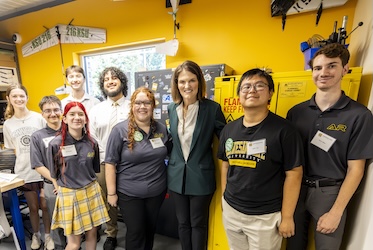
That sense of community extended into his campus involvement. Quarles participated in the Robotics and Automation Club and joined the Institute of Electrical and Electronics Engineers Honor Society, where he contributed to panels and shared his experiences with other students. He also served as a student lead for the First Year Scholars program in floating treatment wetlands research under Assistant Professor Amy Gruss and spoke at the Georgia Association of Water Professionals conference on developing perspective-taking skills in engineering students through art.
Beyond campus involvement, Quarles built an extensive research portfolio across robotics, sustainability, and biomedical engineering. His team earned first place at the Spring 2026 Senior Capstone Design Expo for developing an autonomous underwater vehicle designed to monitor coral reef bleaching. He also worked as a graduate research assistant under assistant professor Sainan Zhang on biomedical exoskeleton research. Quarles contributed to OwlSat research under assistant professor Cary Chun and completed direct air capture research at Georgia Institute of Technology under professor Valerie Thomas. He also gained industry experience through a co-op with Southern Flow Inc.
This fall, Quarles will continue at Kennesaw State, pursuing a Master of Science in Intelligent Robotic Systems, with plans to eventually earn a Ph.D. He hopes to use his education to make a meaningful impact beyond his career.
“I want to use what I learn to help people,” he said. “It’s about building something that can make life better for others.”
– Story by Raynard Churchwell
Photos by Matt Yung
A leader in innovative teaching and learning, Kennesaw State University offers undergraduate, graduate, and doctoral degrees to its more than 51,000 students. Kennesaw State is a member of the University System of Georgia with 11 academic colleges. The university's vibrant campus culture, diverse population, strong global ties, and entrepreneurial spirit draw students from throughout the country and the world. Kennesaw State is a Carnegie-designated doctoral research institution (R2), placing it among an elite group of only 8 percent of U.S. colleges and universities with an R1 or R2 status. For more information, visit kennesaw.edu.