KENNESAW, Ga. | Mar 9, 2026
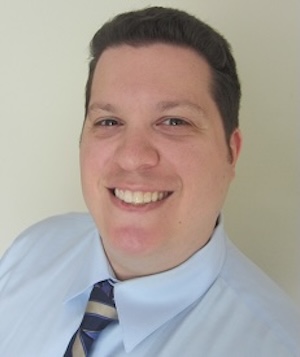
As a researcher focused on ions at the mineral‑water interface and their role in soil health, the trip proved invaluable, giving him a real‑world application for his work.
Years later, though, Ferreira reflected on an experience in meeting Fukushima’s farmers, away from the research sites and goals of his travels.
“The first time I went to Fukushima, right as we were leaving, I asked one of the farmers what I could do to help,” said Ferreira, an associate professor of environmental science in the College of Science and Mathematics. “What he wanted most was for me to tell people about the farmers and the struggles they were dealing with. The farmers feel like nobody knows what they’re going through. And I thought, this is my mission now.”
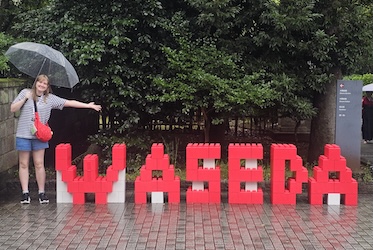
That realization occurred to Ferreira toward the end of his last trip to Japan in May 2025 with a group of undergraduates from across KSU’s campus as part of a Maymester trip titled Earth Science and Culture of Japan. He had taken his research into removing radioactive cesium from the soil near the Fukushima Daiichi nuclear power plant as far as he could. So, Ferreira pivoted his purpose to advocacy for the farmers of the region, and to keeping their story alive.
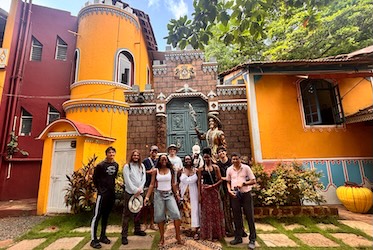
Creating a study abroad program gave Ferreira a different way to do just that, by showing the landscape to a new group of college students each year. Students traveling to Japan enjoy the large, sometimes overwhelming metropolises of Tokyo and Kyoto, but they also get a healthy dose of the countryside in Fukushima and Hakodate, a smaller city on the Island of Hokkaido.
Fall 2025 graduate Dylan Seymus of Alpharetta took three classes from Ferreira for his environmental science bachelor’s degree, so it was an easy decision to join the trip last summer. A future soil scientist, Seymus figured he’d get a strong grounding in that aspect of Ferreira’s work but came away with much more than that – an appreciation for what soil science can do.
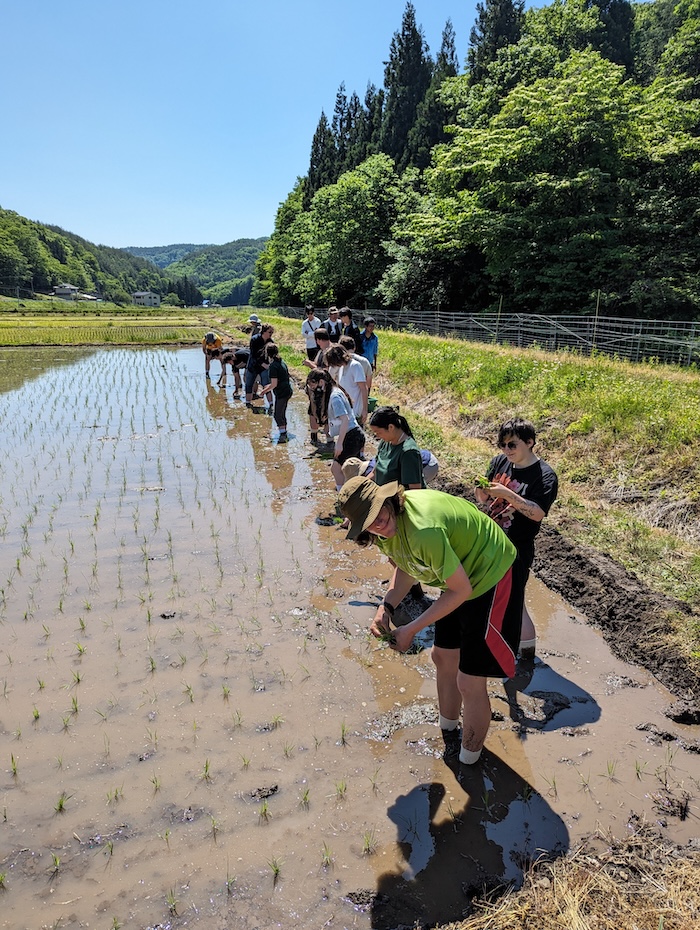
While many farmers in Fukushima struggle to sell their rice, some do continue to grow it. KSU students not only get immersed in the culture but also into the farming of rice thanks to a local farmer happy to show groups of American college students how to plant rice. Ferreira received some surprising feedback that guaranteed this experience will remain a part of the Japan study abroad program.
“The students actually get into the rice paddy and plant about a quarter of the rice paddy with seedlings,” he said. “I was expecting to hear complaints about how dirty and muddy it was, but they loved it. One of them said, ‘None of my friends will ever get to do something like this.’ So they took that part of the study abroad from a completely different perspective than what I was expecting.”
For another future scientist, Ferreira’s message came through in a different way. Senior biology major Lana Syms, of Alpharetta, made the journey in 2024, seeking the opportunity to soak up the culture while learning about nature and the environment on the other side of the world. She didn’t realize that she would take Ferreira’s mission to heart – scientists make their discoveries for the benefit of people.
– Story by Dave Shelles
Photos provided
A leader in innovative teaching and learning, Kennesaw State University offers undergraduate, graduate, and doctoral degrees to its more than 51,000 students. Kennesaw State is a member of the University System of Georgia with 11 academic colleges. The university's vibrant campus culture, diverse population, strong global ties, and entrepreneurial spirit draw students from throughout the country and the world. Kennesaw State is a Carnegie-designated doctoral research institution (R2), placing it among an elite group of only 8 percent of U.S. colleges and universities with an R1 or R2 status. For more information, visit kennesaw.edu.