


KENNESAW, Ga. | Nov 20, 2026
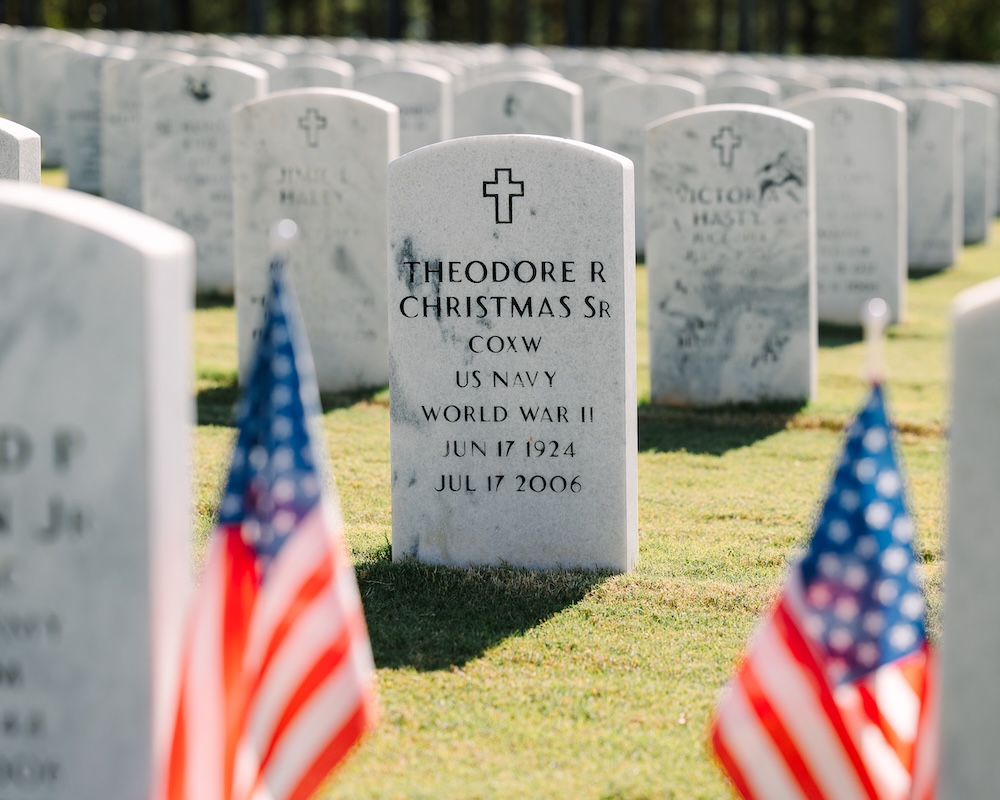
Through the two projects, Profiles of Resilience and Veterans and Visionaries, researchers at KSU’s Center for the Advancement of Military and Emergency Services (AMES) are examining how veterans and their families face challenges, support one another, and leave lasting legacies.
“The projects connect personal experiences with lessons that can help people today,” said Kristin Horan, an associate professor of psychological science and director of community outreach and engagement for the center. “People face adversity every day and I think there are some valuable lessons that we can learn from either the families or the veterans featured in these projects.”
Led by AMES Director Brian Moore, Profiles of Resilience began with military couples and expanded to include first responders and caregivers. Support from the Arthur Blank Foundation enabled researchers to work with the Rosalynn Carter Institute to capture additional caregiving experiences, including those of adult children caring for parents and siblings supporting military family members.
Through structured interviews, the researchers explored participants’ challenges, sources of support and lessons learned. After the interviews, researchers turn the veterans’ stories into storyboards featuring photographs, personal accounts and timelines of important moments. Families review the profiles, decide what to include and receive their own copies. Storyboards also hang at the AMES Center, where visitors can read them and recognize parts of their own experiences.
Katherine Moore a clinical case manager at AMES and Dr. Bianca Channer, director of Clinical Core at AMES, conducted the interviews and helped create the profiles. They shared that for many participants their greatest battle was often fought after their military service ended.
One 90-year-old veteran and Silver Star recipient described the fear that his child might overdose as his greatest stressor. Another service member rose to colonel while caring for his wife after she suffered a stroke.
Katherine Moore added that faith, spirituality, social support and access to community resources repeatedly emerged as important sources of strength. Yet participants did not always describe themselves as resilient. Many simply felt they had done what was necessary to get through a difficult time.
The second project, Veterans and Visionaries, was developed through a partnership with the Georgia Department of Veterans Service and supported by the Veterans Legacy Grants Program. The project initially focused on veterans buried in Georgia cemeteries who served in a segregated military during World War II and later participated in the Civil Rights Movement.
Researchers interviewed surviving relatives to learn about the veterans’ lives, contributions and influence on their families. Finding those relatives required connecting fragments of family history. KSU researcher Chris Hess developed a method for linking cemetery records with ancestry records, helping researchers investigate veterans’ lives, identify their civil rights contributions and locate living family members.
“We use a computer to search archival records with an automated process and then our students review the results for accuracy," Hess said. “We gathered approximately 10,000 records from across four major cemeteries: the Georgia National Cemetery in Canton, the Georgia Veterans Memorial Cemetery in Milledgeville, the Andersonville National Cemetery, and the Marietta National Cemetery.”
The project has since expanded to include Korean and Vietnam War veterans and stories from other Southeastern states. A traveling museum exhibit brings the histories to schools, libraries and community organizations, with students involved in researching and communicating the findings.
– Story by Christin Senior
Photo by Janell Mitchell
Kennesaw State provides life-saving military and first responder research and programming

KSU students prepare to deliver research findings at Fall Symposium of Student Scholars

KSU researcher joins NSF-funded collaborative project to improve emergency communications
KSU researcher receives NIH grant to study 'forever chemicals'
A leader in innovative teaching and learning, Kennesaw State University offers undergraduate, graduate, and doctoral degrees to its more than 51,000 students. Kennesaw State is a member of the University System of Georgia with 11 academic colleges. The university's vibrant campus culture, diverse population, strong global ties, and entrepreneurial spirit draw students from throughout the country and the world. Kennesaw State is a Carnegie-designated doctoral research institution (R2), placing it among an elite group of only 8 percent of U.S. colleges and universities with an R1 or R2 status. For more information, visit kennesaw.edu.

