KENNESAW, Ga. | Mar 30, 2026
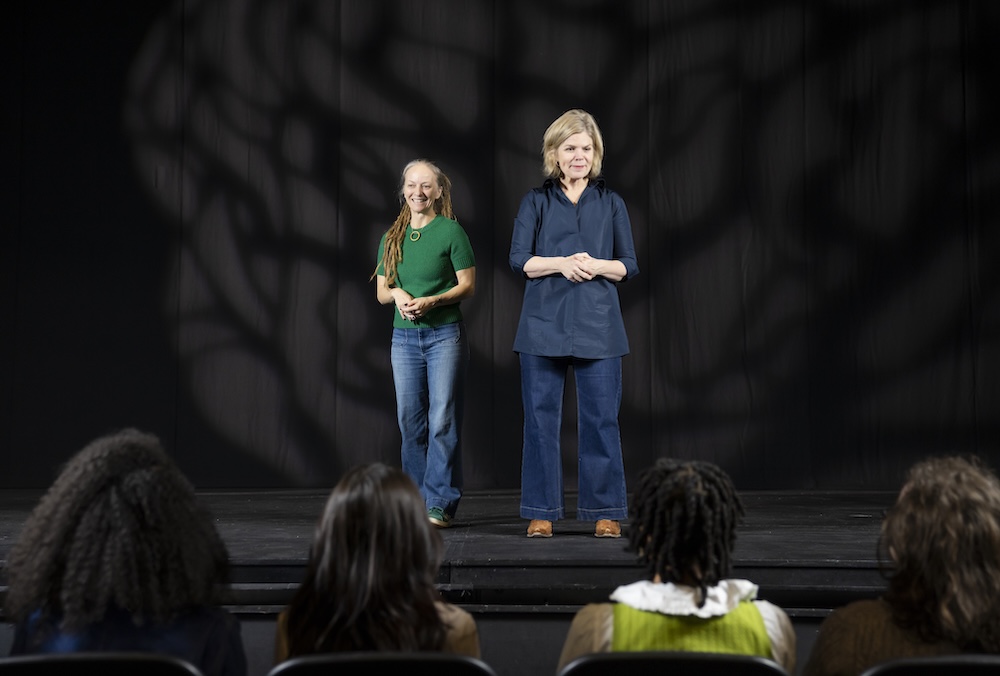
The initiative is a part of KSU’s New Connections Project, which began in 2019 and pairs KSU criminal justice and theatre students with learners at the Atlanta Transitional Center, a correctional facility for persons who will soon be released.
The project recently received support through a $900,000 collaborative grant from the Bureau of Justice Assistance, an agency within the U.S. Department of Justice. The grant was awarded to Common Good Atlanta, a nonprofit that provides higher education to people who are or have been incarcerated, and is shared with KSU’s New Connections Project, West Georgia University, and the National Incarceration Association.
Co-director of the project, Tanja Link, professor of sociology and criminal justice in the Norman J. Radow College of Humanities and Social Sciences, said one of the goals of the project is to help students get a better understanding of the criminal justice system beyond one-dimensional narratives about crime and punishment.
“We’re learning together,” Link said. “Everybody is vulnerable and everybody is there to discover something they didn’t know before. Students realize, ‘I could be on the other side if my parents didn’t have money or if my education was different.’ And those light bulbs go off because of empathy – something you cannot learn solely in the regular classroom.”
The course connects KSU students with incarcerated students inside the facility who are enrolled in the Clemente Course in the Humanities, a nationally recognized curriculum that offers college credit for incarcerated individuals through Bard College. Students at the facility earn six college credits by completing five subjects: critical thinking and writing, literature, American history, art history, and philosophy. All classes are taught by college professors, including some from KSU.
This semester’s learning experience is led by Margaret Pendergrass, co-director of the project and senior lecturer of theatre and performance studies in the Robert S. Geer Family College of the Arts.
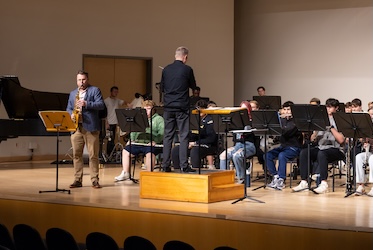
Students engage in critical and creative responses to classic and contemporary literature, ranging from Homer’s The Odyssey to Percival Everett’s novel James and works by contemporary poets. The course will culminate in a collaborative staged reading of scenes from Our Town, Thornton Wilder’s 1938 American classic that explores community, belonging, and the meaning found in everyday life.
"The theatrical space can be a real confidence builder for all our students," Pendergrass said. "Criminal justice majors, who spend most of their academic coursework in large lecture classes, learn to collaborate and overcome fear of public speaking in new contexts. Theatre students learn to apply their skills into non-traditional performance spaces. And Common Good Atlanta students, most of whom have been within the carceral system for many years--theatre and performance give them a welcoming and supportive space in which to be seen and heard."
"We've found that bringing our Kennesaw students in to work with incarcerated students becomes a wonderful way to enhance the learning for everyone," said Pendergrass.
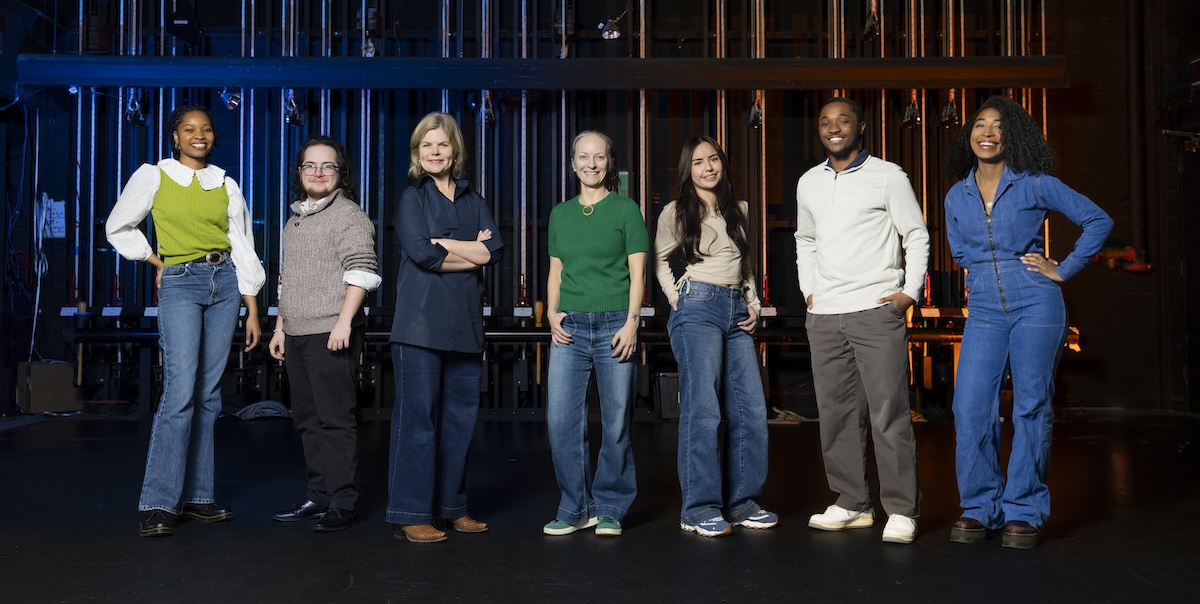
“The theatre class is a real confidence builder for people who have been within the carceral system for many years,” Pendergrass said. “It's not a place known for teamwork. It's sort of everybody for themselves, so learning to trust others again is hard. But it’s something that we've seen again and again in these classes. You can see people start to open up and be willing to be vulnerable.”
The experience also gives KSU students an opportunity to engage directly with people affected by the criminal justice system and get a better understanding of the policies or statistics they are studying in their traditional criminal justice classes.
“We want our students to step into their careers able to interact without bias, to understand structural inequalities, and to recognize that people’s paths are shaped by trauma and real obstacles and not just a simple failure to try,” Link said. “And for our incarcerated learners, we want them to feel hope, to know they are supported, and to build the communication and critical thinking skills that make sustainable reentry possible.”
– Story by Christin Senior
Photos by Matt Yung
A leader in innovative teaching and learning, Kennesaw State University offers undergraduate, graduate, and doctoral degrees to its more than 51,000 students. Kennesaw State is a member of the University System of Georgia with 11 academic colleges. The university's vibrant campus culture, diverse population, strong global ties, and entrepreneurial spirit draw students from throughout the country and the world. Kennesaw State is a Carnegie-designated doctoral research institution (R2), placing it among an elite group of only 8 percent of U.S. colleges and universities with an R1 or R2 status. For more information, visit kennesaw.edu.