KENNESAW, Ga. | Jun 16, 2026

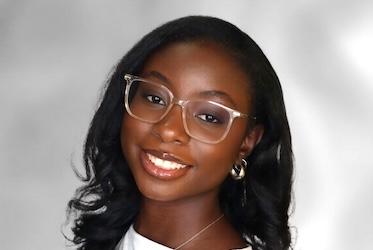
Saloni Patel, a first-year psychology major at Kennesaw State University, is studying how adverse childhood experiences — commonly known as ACEs — leave a measurable biological mark that can affect how we think, focus, and learn. Her research examines whether inflammation triggered by early-life stress contributes to the cognitive struggles some students face in the classroom.
“Everyone is a person at the end of the day, and they all have a story behind them,” Patel said. “By mapping how early life stress lingers in the bodies and minds of my peers, we can better understand the invisible biological weights that students carry into the classroom every single day.”
Working with faculty mentor Sharon Pearcey, a professor of psychology at the Norman J. Radow College of Humanities and Social Sciences, Patel examined whether inflammation could help explain why some individuals who experience childhood trauma are more vulnerable to depression, anxiety, and memory-related difficulties later in life.
Using a sample of 95 KSU students, Patel collected data measuring ACEs, depression, anxiety, and stress. Participants also completed a cognitive test, and saliva samples were taken to measure C-reactive protein (CRP), a marker of inflammation.
“The findings revealed that higher levels of depression and stress were associated with poorer cognitive performance,” Patel said. “As psychological distress increased, participants became less accurate on more demanding cognitive tasks, meaning mental health struggles do affect memory and attention.”
Patel said the findings revealed that inflammation played a complex role. Participants that had low to moderate inflammation, higher depression was strongly linked to worse cognitive performance. But that relationship was not shown in participants with high inflammation.
“We expected high CRP levels to always mean worse cognitive outcomes,” she said. “But that link disappears in the high-inflammation group. One possible explanation is that in people with chronic inflammation, the system might already be so overwhelmed that everyday variations of depression won't significantly affect their performance.”
More research is needed to fully understand the mechanisms at play.
The research has far-reaching implications for both students and healthcare providers, Pearcey said. Clinical neuropsychologists, for example, could potentially use CRP levels to anticipate and address cognitive challenges in patients with histories of childhood adversity.
"The relationship between childhood adversity, mental health, inflammation, and brain function is incredibly complex," Pearcey said. "By better understanding how these factors work together, we may be able to identify people who are at greater risk and develop new ways to support their mental and cognitive health."
Patel has presented her findings at the Georgia Students in Psychological Science symposium, held at KSU, and at KSU’s Symposium of Student Scholars.
“We’re really just scratching the surface of how trauma bridges body and mind,” she said. “I plan to look at live brainwaves as students complete tasks, so we can visually map how biological inflammation and mental-health struggles disrupt active brain processing.”
– Story by Christin Senior
Photo provided
A leader in innovative teaching and learning, Kennesaw State University offers undergraduate, graduate, and doctoral degrees to its more than 51,000 students. Kennesaw State is a member of the University System of Georgia with 11 academic colleges. The university's vibrant campus culture, diverse population, strong global ties, and entrepreneurial spirit draw students from throughout the country and the world. Kennesaw State is a Carnegie-designated doctoral research institution (R2), placing it among an elite group of only 8 percent of U.S. colleges and universities with an R1 or R2 status. For more information, visit kennesaw.edu.