KENNESAW, Ga. | Aug 25, 2026
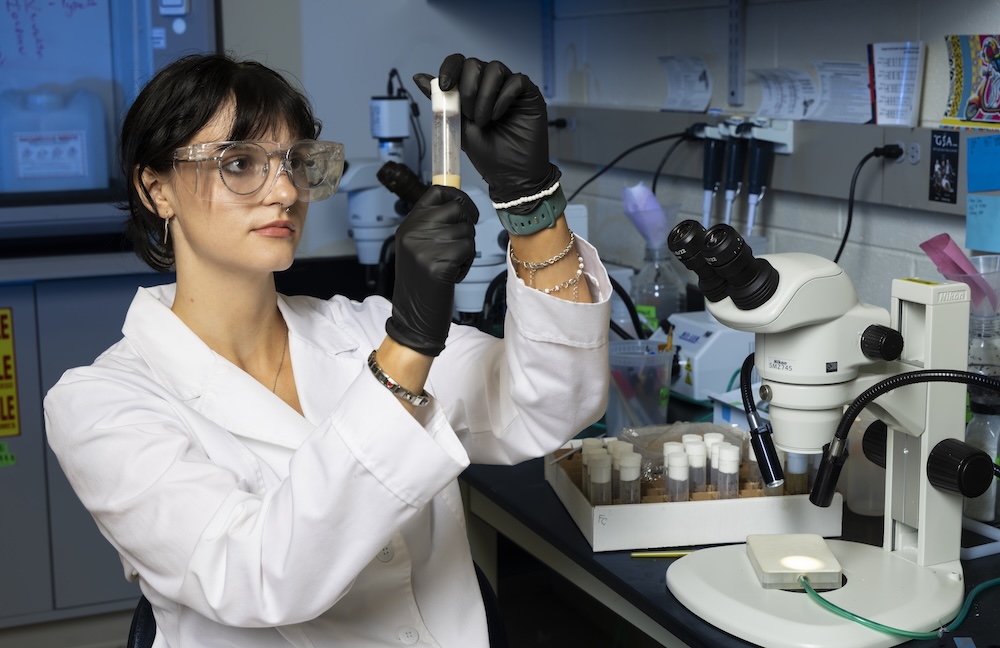
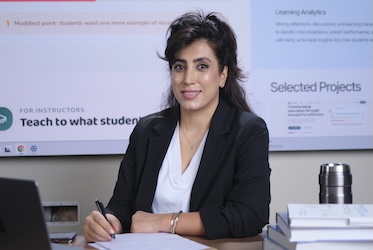
The routine was part of her research into how fat tissue changes shape and moves as fruit flies grow and develop. Conkle was among 25 Kennesaw State University students who spent eight weeks, mentored by faculty, working full time on various research projects through the Summer Undergraduate Research Program.
Offered through the Office of Undergraduate Research, the competitive program allows students to devote 40 hours each week to research alongside a full-time tenured or tenure-track faculty mentor. Students receive a $4,000 stipend, attend professional development workshops, complete progress reports, and prepare to present their findings at KSU’s Fall Symposium of Student Scholars.
“Our Summer Undergraduate Research Program is designed to give students the opportunity to move beyond the classroom and experience what it means to be a researcher — asking meaningful questions, tackling challenging problems, and contributing to new knowledge,” Executive Director of Undergraduate Research Amy Buddie said. “For students, the program builds research skills, confidence, professional relationships, and a clearer sense of their future possibilities. For faculty mentors, it is an equally rewarding opportunity to engage with the next generation of scholars, bring fresh perspectives into their research, and experience the excitement of mentoring students as they grow into independent researchers.”
Conkle, a rising junior, studied a hormone receptor that helps regulate growth and development in fruit flies. During development, fat tissue in the flies’ abdomens changes shape before migrating toward their heads. Conkle wants to understand how and why.
While the project focuses on fruit flies, Conkle says the findings could contribute to a much larger body of knowledge.
“As we learn more about fruit flies, we’re able to learn more about people since many of their genes and biological systems are similar to humans’,” explained Conkle, who is studying under Joanna Wardell-Ozgo, assistant professor of molecular and cellular biology. “So, if we have a better understanding of how the fat reshapes and migrates, this could have implications for improving wound healing and help scientists better understand conditions like lipodystrophy, which is the abnormal storage and distribution of fat in humans.”
For Conkle, the project reinforced everything she loves about research: the creativity, the discovery and the opportunity to contribute to a growing body of knowledge.
“I love research,” Conkle said. “It feels like a group project with the whole world. You’ve taken everything humans have ever known, and you’re adding to that constantly growing body of knowledge.”

Using records from the National Bridge Inventory, O’Neal is developing a machine-learning model designed to predict how a bridge’s condition could change over time. The goal is to help transportation officials identify bridges that may be at risk of significant deterioration before serious problems emerge.
“We want to be able to predict whether a bridge will deteriorate over time, whether it will go from good to bad, so we know to pay closer attention to that specific bridge,” said O’Neal, who is being mentored by Da Hu, assistant professor of engineering in smart infrastructure.
As a computer science major, O’Neal had to take what amounted to a crash course in civil engineering to understand the infrastructure behind her data. That experience has opened her eyes to a new career path, and she is now considering pursuing civil engineering in graduate school.
“I was never interested in it before. My freshman-year roommate was a civil engineering major, and it never even sparked an interest. I don’t think I really knew what it was,” she said. “But after graduation, I would hopefully go to graduate school for civil engineering because I want to keep doing civil engineering research as a career.”
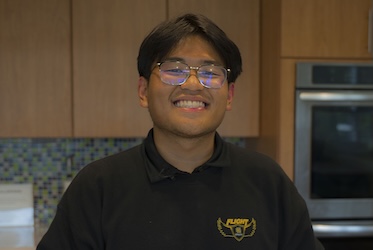
The program also gives students the opportunity to do research in an area they are passionate about. For music major Jackson Kodani, that was studying opera, a genre he fell in love with after his KSU violin professor Helen Hwaya Kim gave him a ticket to see Mozart’s The Magic Flute at The Atlanta Opera.
“When I saw the conductor Arthur Fagen in action, that’s when I knew it was something I wanted to do,” said Kodani, who researches with Jeffrey Yunek, associate professor of music theory. “I wanted to be at the helm. I wanted to direct that.”
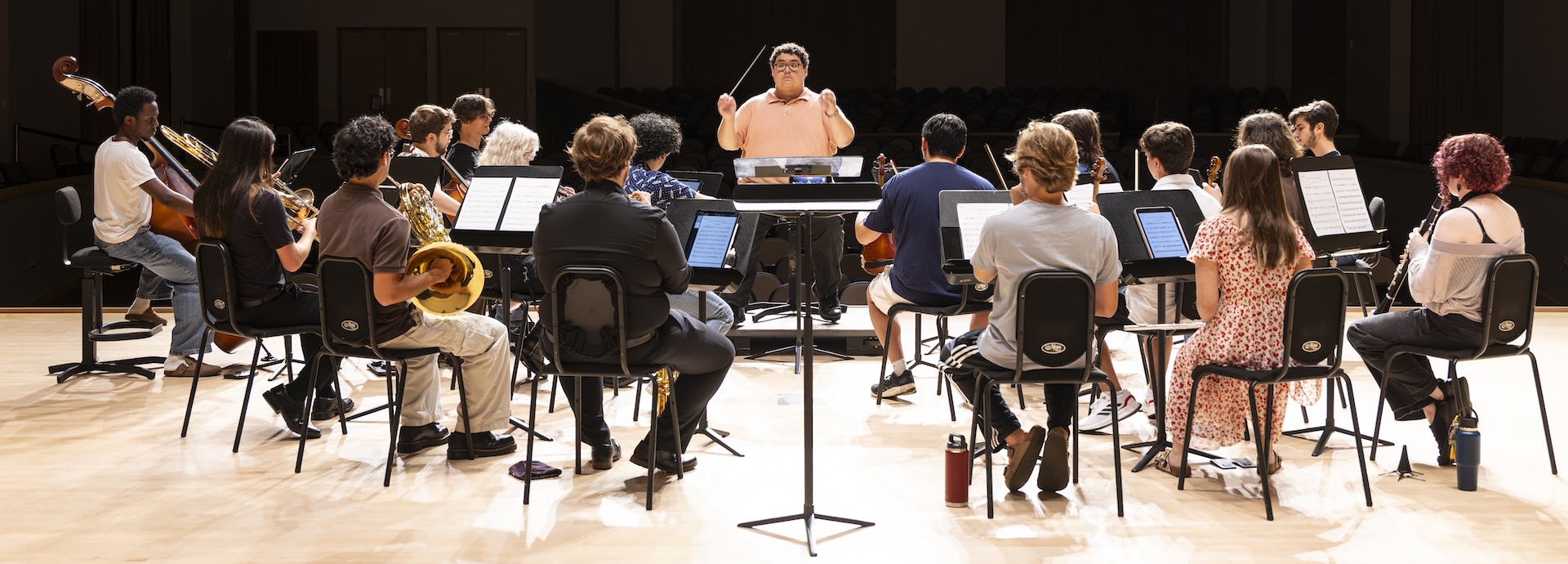
Kodani is creating a performance guide for Kashchey the Immortal, a one-act opera based on a Russian fairytale in which a prince sets out to rescue a captive princess. Although Rimsky-Korsakov is considered one of Russia’s most influential composers, many of his operas are rarely staged in the United States. Kodani is working to develop a practical roadmap that he hopes will make the work less daunting to produce and introduce more American audiences to Rimsky-Korsakov’s music.
“My goal with the project is to make it more accessible so it can be performed more,” Kodani said. “When people don’t know about an opera, they are much less likely to perform it.”
Although their projects look vastly different, Conkle, O’Neal and Kodani each spent the summer confronting the uncertainty at the center of research. They learned to ask questions, adapt when an approach did not work and continue searching for answers.
Kodani advised interested students not to let uncertainty or a lack of previous experience prevent them from pursuing research opportunities.
“Just let yourself do it. Dive in,” he said. “You never know what opportunities you’re going to find. That’s the point of research: you don’t know, so you find out. Often, you learn on the job. Just do it, even if you’re scared.”
Click here to learn more about student research opportunities at KSU.
– Story by Christin Senior
Photos by Matt Yung
Video by Matthew O'Neill
A leader in innovative teaching and learning, Kennesaw State University offers undergraduate, graduate, and doctoral degrees to its more than 51,000 students. Kennesaw State is a member of the University System of Georgia with 11 academic colleges. The university's vibrant campus culture, diverse population, strong global ties, and entrepreneurial spirit draw students from throughout the country and the world. Kennesaw State is a Carnegie-designated doctoral research institution (R2), placing it among an elite group of only 8 percent of U.S. colleges and universities with an R1 or R2 status. For more information, visit kennesaw.edu.