KENNESAW, Ga. | Jan 6, 2026
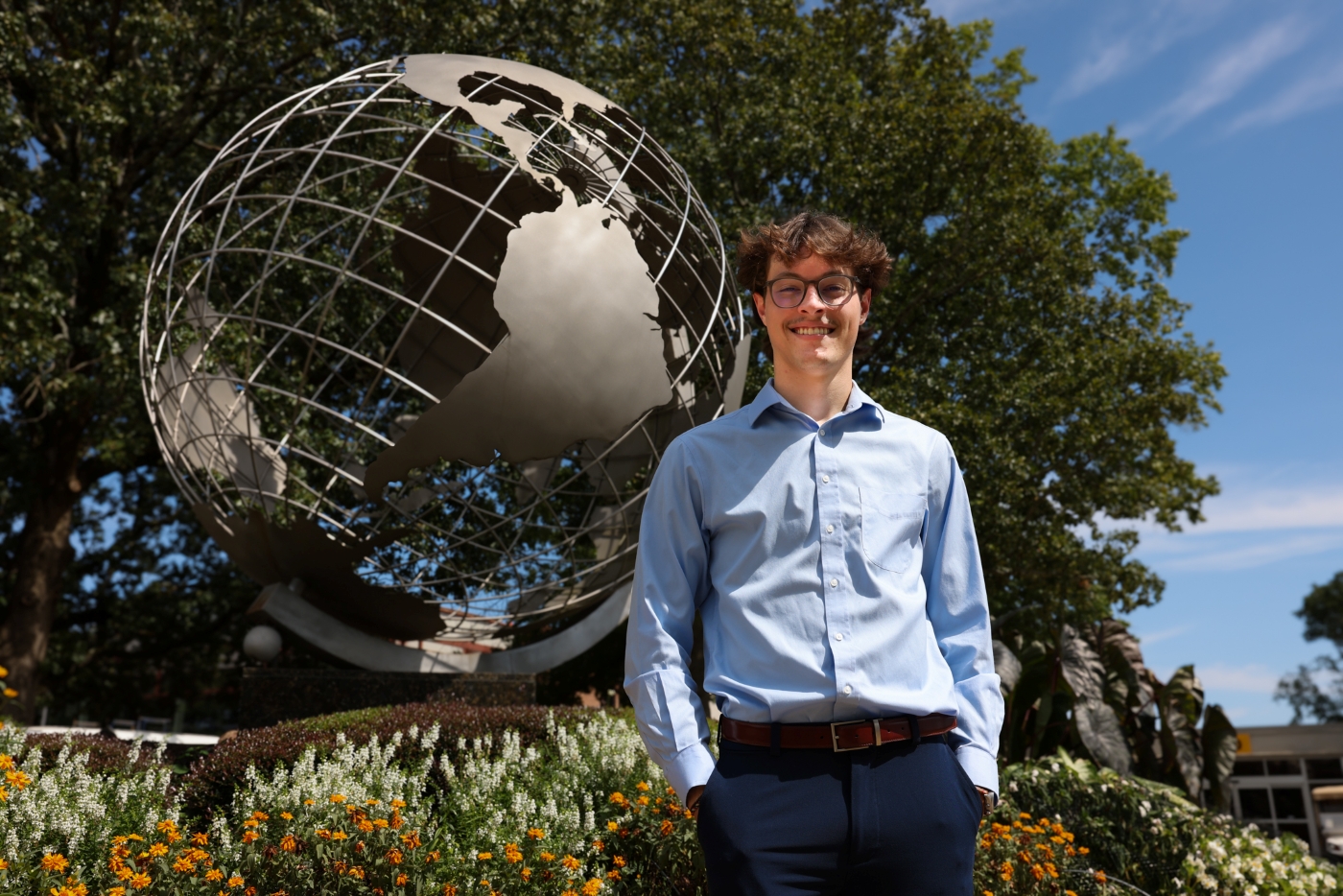
Christian Sousa’s childhood was full of family trips on the water. He looks back fondly on memories of cruises to the Caribbean, Alaska, and Europe, but what captivated him most were the undiscovered wonders of the ocean beneath the ship.
The Norman J. Radow College of Humanities and Social Sciences at Kennesaw State University offered him the place to nurture his curiosity and transform it into a professional career.
Sousa, a senior from Newnan, Georgia, is pursuing a Bachelor of Science in Geospatial Sciences (GSS) with a concentration in land surveying and a minor in biology. He started college as a biochemistry major before realizing that another path was calling him.
"I was looking for anything related to geography, but I found Geospatial Sciences, and there was... everything lit up on the check marks,” Sousa said. “I immediately fell in love and [was] extremely interested in everything it has to offer.”
He describes the field of geospatial science as “modernized cartography.” Instead of drawing maps by hand, the program teaches students how to use geospatial technologies, including remote sensing, land surveying, and Geographic Information System (GIS). KSU GSS students go on to use their skills in various career fields, which range from military science to crime analysis and urban planning.
Sousa narrowed down his interest by connecting with his childhood memories.
“I’ve always been on the water, and like I said, with geography and how I’ve always had an interest in it, I wanted to relate those two,” Sousa said. “I got to the field of mapping the ocean floor. I did some research, and there’s an initiative called Seabed 2030, where the goal is to map the entire ocean floor by 2030 in high contrast, which is using multibeam sonar and different, newer technologies.”
He realized that hydrography combined his love of geography and his fascination of what lies beneath the waves. He explained that hydrographers map the ocean and other large bodies of water by using satellite lidar (Light Detection and Ranging) and sonar (Sound Detection and Ranging).
Sousa said that hydrography has a much larger impact on the world than many people realize.
“In terms of hydrography and everything mapping with the ocean floor, that influences transportation. Gathering cargo, shipping routes, everything involved with how we get our supplies from overseas [involves] how we see the ocean floor and how we can get those ships into ports,” Sousa said. “It’s kind of wild to me how many people... don’t know how much of a role cargo ships still play in things until they get stuck in the Suez Canal or something,” he continued.
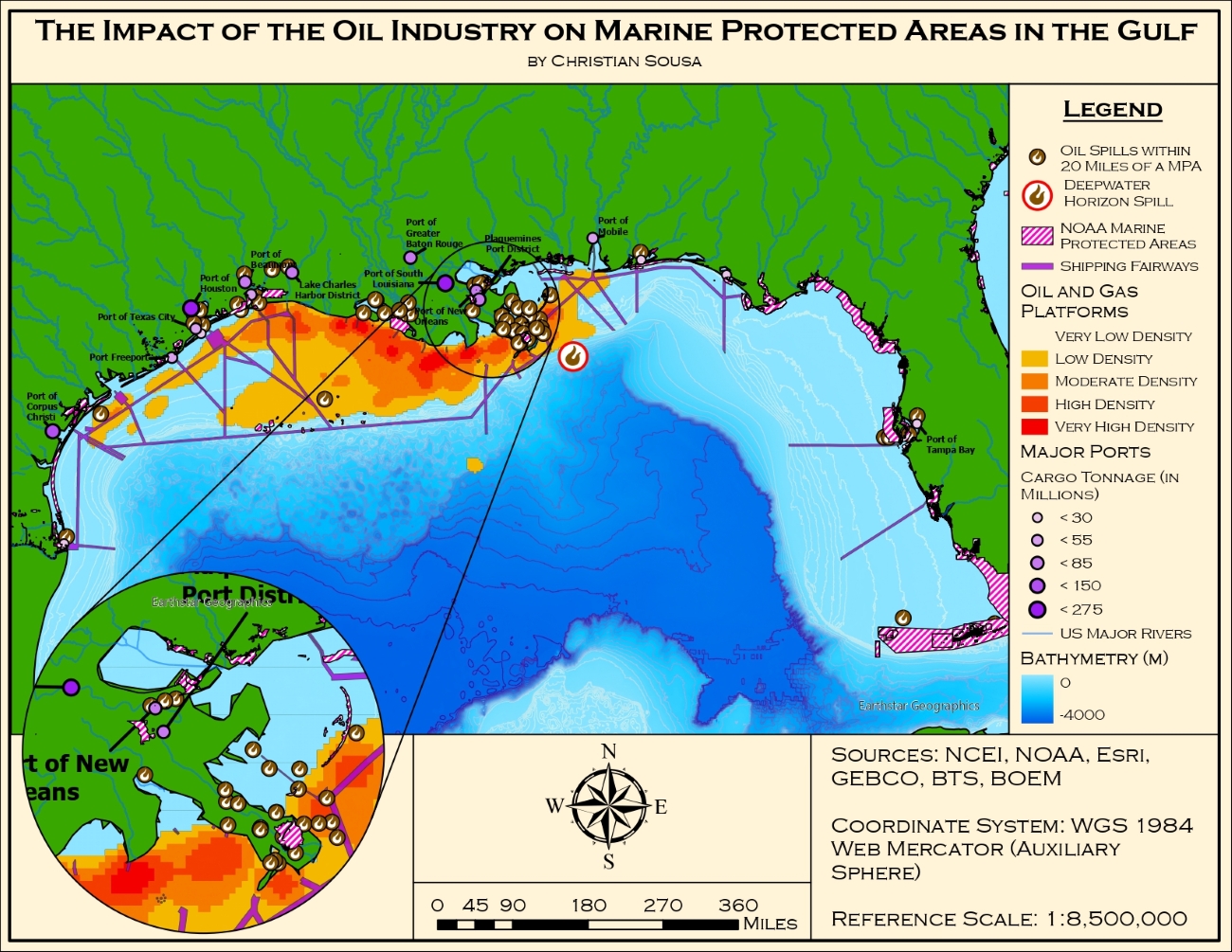
Sousa is on track to complete his undergraduate degree in May 2026, and he plans to pursue a master’s degree in marine science or hydrography to further his career. His advice to students who are at the beginning of their college experience is to be patient with themselves, cultivate their interests, and make the most of their time at KSU.
“We all develop our own skills and passions as we go, Sousa said. “As it comes to you, take advantage of it as fully as you can.”
--story and photos by: Noelle Lashley