KENNESAW, Ga. | Dec 24, 2025
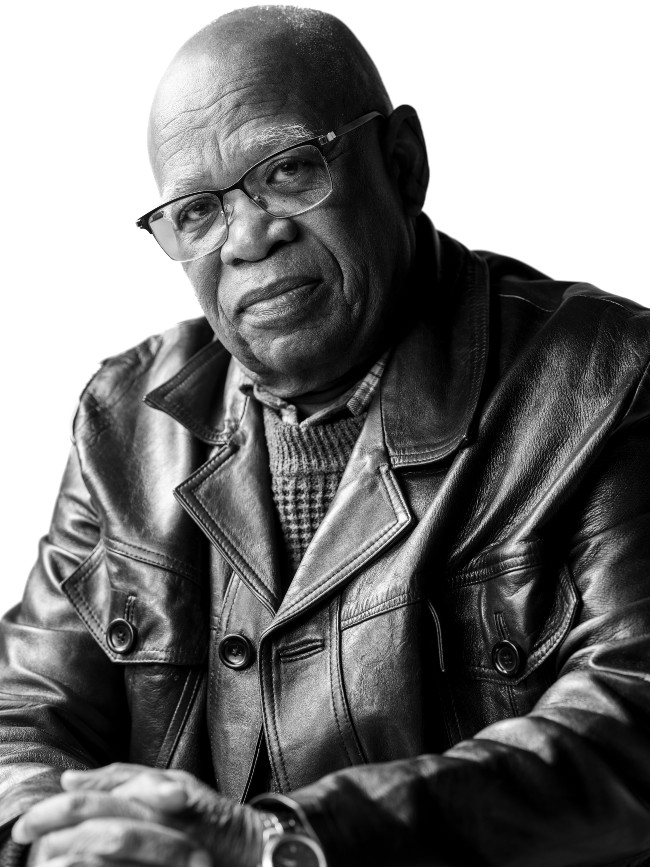
Among the many artifacts packed in boxes in Huggins Msimanga’s office, a rock offers a good explanation for his legacy at Kennesaw State University.
Over the past 10 years of his tenure at KSU, the professor of chemistry would take
out the rock on the first day of his analytical chemistry class. He’d hold up the rock and ask, somewhat rhetorically, what is this rock made of? (video)
The Day 1 lesson to his students involved making observations, scratching a little deeper at the rock’s surface, making further inferences from handling the rock, and then developing a hypothesis about what the rock and its properties mean in the broader context of an experiment. That set the tone for the semester, he said.
“All of my lessons have been about application of what we learn – applying it to this class, to other classes the students may take, and if they go on to careers in chemistry, the lessons apply to those as well,” Msimanga explained. “What instruments should we use? What are our expectations? What can we observe? Analytical chemistry exposes students to those kinds of things.”
Msimanga has packed up the rock, instruments, reams of studies and shelves full of books. Last week, he filed grades for the last time, retiring after 37 years at KSU and taking with him decades of scholarship and teaching. Msimanga couldn’t estimate the number of students that came through his classes and laboratories but said KSU has served him and his students well in his insistence that teaching and research are inseparable.
“In my laboratory we created research projects on things we use every day because analysis principles apply to everything,” he said. “All these projects required computers, software, and data instruments, and the university made sure we had what we needed.”
Originally from Zimbabwe, Msimanga arrived at KSU in 1988 after completing his doctorate at Georgia Tech. He taught classes at every level, from freshman chemistry to senior-level forensic analytical chemistry, as well as directed applied research for advising students on writing manuscripts. He published several articles and gave scores of presentations at conferences with students and colleagues, including Chris Dockery.
Dockery, a professor of chemistry and faculty director of general education in Academic Affairs – Office of Curriculum and General Education, published with Msimanga and said they had similar ideas about that indelible connection between teaching and research. They collaborated on a project that also underscored the importance of work readiness among KSU graduates.
“For two decades, we shared a research laboratory, collaborating often on projects and exchanging ideas about teaching and mentorship,” Dockery said. “In 2008, we were invited to assist the Georgia Bureau of Investigation in validating the chemistry examination administered to applicants for chemistry and toxicology scientist positions, work that underscored the program’s growing reputation and Huggins’s expertise.
“On a personal note, Huggins is one of the kindest colleagues I have known, always ready with a smile, a warm greeting, and genuine support. His contributions to our department, the college, and the university are immeasurable, and his retirement leaves a void that will be deeply felt by the campus community.”
Department of Chemistry and Biochemistry chair Kai Shen started this fall at KSU, but got to know Msimanga well, and reiterated Msimanga’s charm and humor in working with students and fellow faculty members. He said Msimanga pioneered the analytical emphasis to the chemistry course of study at KSU and did it with enthusiasm.
“It is very clear how deeply he has shaped our department over his 37 years at KSU,” Shen said. “He built the core of our analytical chemistry curriculum and helped position KSU as a place where students gain not only strong theoretical foundations but also the hands-on, real-world skills that prepare them for graduate school, professional schools, and the laboratory workforce.”
Msimanga said he’s witnessed major changes over his nearly four decades at KSU, mostly the rapid expansion of the University from a regional college to a major university; KSU has nearly 10 times as many students as when he started in 1988. Academically and culturally, within the College of Science and Mathematics he noted increased collaboration across disciplines, which has led to more sophisticated undergraduate research projects and greater achievements among faculty.
“The recent publications, well-collaborated by scientists of different disciplines, have attracted more readers and more visibility than my individual papers earlier in my career,” he said. “I can’t apply analytical chemistry in isolation from other disciplines, which is a good thing.”
For the immediate future, he’ll spend time with his wife, Ntombiyomusa Doris, also a Georgia Tech graduate, and their three children and five grandchildren. And he’ll reflect on all the lessons in chemistry, including that rock.
“My memory is still sharp, so 37 years feels like a short space of time,” he said. “I hadn’t planned on being here that long, but I got accustomed to it, interacting with different student and faculty personalities, and that variation kept me on my toes. I liked it.”
Story by Dave Shelles
Photos by Darnell Wilburn
A leader in innovative teaching and learning, Kennesaw State University offers undergraduate, graduate, and doctoral degrees to its more than 51,000 students. Kennesaw State is a member of the University System of Georgia with 11 academic colleges. The university's vibrant campus culture, diverse population, strong global ties, and entrepreneurial spirit draw students from throughout the country and the world. Kennesaw State is a Carnegie-designated doctoral research institution (R2), placing it among an elite group of only 8 percent of U.S. colleges and universities with an R1 or R2 status. For more information, visit kennesaw.edu.